
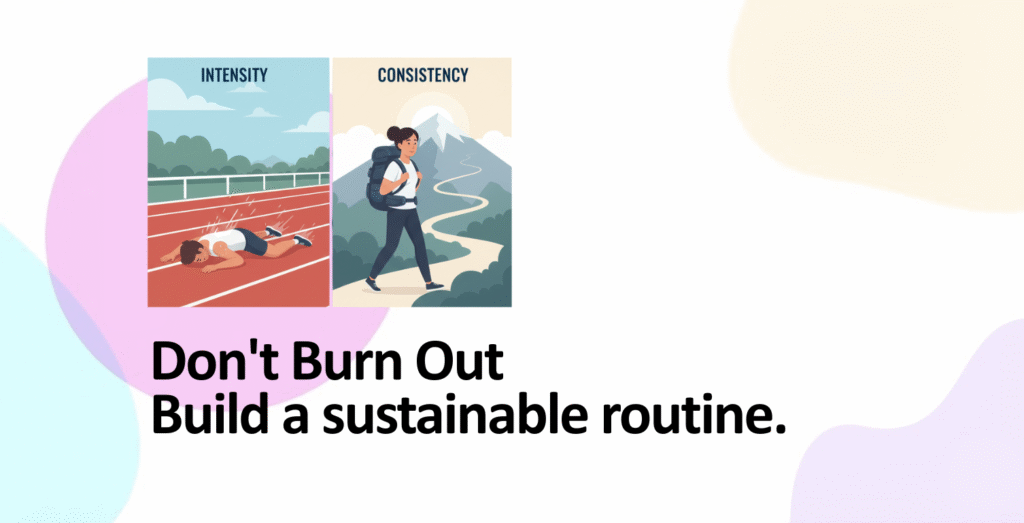
The burnout epidemic (2025): 54% of founders burned out last year, 83% high stress, 75% anxiety, 46% bad mental health, only 6% no issues. Chronic inconsistency: founder stress cascades to teams (16% lower well-being, 14% more burnout), kills creativity, destroys consistency. Recovery path: boundaries, delegation, support systems, knowing when to quit.
Table of Contents
- The Burnout Epidemic: 2025 Data Nobody Wants to Admit
- Why Founders Burn Out: The Perfect Storm
- Signs You’re Burning Out: Before It’s Too Late
- Chronic Inconsistency: How Your Burnout Becomes Team Burnout
- The Cost to Your Company: Quantified
- Recovery Path: Setting Boundaries & Delegation
- Support Systems: You Can’t Do This Alone
- Knowing When to Quit: Permission to Step Away
- Burnout Recovery Checklist
The Burnout Epidemic: 2025 Data Nobody Wants to Admit
Let’s start with numbers. These aren’t theoretical. These are actual founders in 2025
| Mental Health Metric | Percentage of Founders | What This Means |
|---|---|---|
| Experienced burnout (past 12 months) | 54% | More than half. This is not rare. This is normal |
| High stress (reported) | 83% | Nearly all founders experience high stress. It’s expected |
| Anxiety | 75% | Three-quarters deal with anxiety. Constant low-level dread |
| Bad or very bad mental health | 46% | Nearly half report their mental health is struggling badly |
| No mental health issues at all | 6% | Only 6%. This is the exceptional founder (the outlier) |
| Considered leaving their startup | 67% | Two-thirds have thought about quitting. More than half seriously |
| Will consider leaving in next year | 39% | Real possibility of exit in next 12 months for 40% |
| Working >50 hours per week | 67% | Two-thirds work more than 50 hours. Sleep is gone |
| Average sleep for top performers | 6 hours | Not enough. Cumulative sleep debt = cognitive decline |
| Insomnia (bouts of) | 54% | Same as burnout rate. Brain won’t shut off at 4am |
The devastating truth: “I don’t see a way forward. It will take too much effort including fundraising so I’ve already decided to shut down the business. I can feel my health improve already even though I will lose a substantial amount of funds.” That’s a real founder quote from 2025 surveys. They’re shutting down just to get healthy
The isolation factor: 56% of founders reported receiving absolutely no mental health support from investors. Only 3.6% received “a lot.” Founders are burning alone
Why Founders Burn Out: The Perfect Storm
The Startup Founder Perfect Storm
- Unlimited responsibility: Employees leave at 5pm. Founders never leave. Your company’s survival is your responsibility. This weight never lifts
- Fundraising is exhausting: Fundraising remains the #1 stressor for founders. Getting “yes” or “no” from investors is emotionally draining. You hear “no” 95% of the time. Your self-worth gets tied to investor decisions
- No clear finish line: You can’t point to “finished.” There’s always one more feature, one more customer, one more round. Achievement brings relief for 2 days, then panic returns
- Responsibility without resources: You need to hire, but can’t afford to. You need to scale, but runway is tight. You’re constrained on every axis
- Binary outcomes: Employee gets fired, company survives. Founder fails, company dies and all value evaporates. The stakes are existential
- Lack of workplace boundaries: Working from home blurs work/life. Slack notifications come at 11pm. You never actually stop working
- Team dependency: If team falls apart, company falls apart. If founder falls apart, team falls apart. You carry both
- Imposter syndrome at scale: Women report 46%, non-binary 100%, men 43%. Everyone feels like a fraud despite visible success
Signs You’re Burning Out: Before It’s Too Late
Burnout has physical, emotional, and behavioral signs. Catch it early before it becomes chronic
Physical Signs (Your Body Screaming)
- Chronic fatigue (you’re always tired, even after sleeping 8 hours)
- Insomnia despite exhaustion (brain won’t shut off at night)
- Frequent headaches or body aches (tension from constant stress)
- Weakened immune system (catching every cold, flu going around)
- Appetite changes (eating too much or too little)
- Weight gain or loss (usually rapid, involuntary)
Emotional Signs (You’re Not Yourself)
- Cynicism about the company (rolling your eyes at your own mission)
- Detachment from people (team meetings feel pointless)
- Emotional numbness (can’t access joy, anger, enthusiasm)
- Increased irritability (snapping at team over small things)
- Anxiety and dread (especially Sunday nights and Monday mornings)
- Loss of purpose (asking “why am I doing this?” frequently)
Behavioral Signs (Your Actions Change)
- Productivity collapse (tasks that took 2 hours now take 8)
- Decision paralysis (can’t make any decisions, procrastinating)
- Withdrawal from friends/family (no energy for relationships)
- Increased substance use (coffee, alcohol, pills to cope)
- Neglecting personal care (showering becomes a chore)
- Perfectionism spike (or the opposite: not caring at all)
Early warning sign: You’re doing the same work but feeling 10x worse about it. That’s burnout starting. It’s not the workload. It’s your capacity to handle the workload. When capacity drops, burnout rises
Chronic Inconsistency: How Your Burnout Becomes Team Burnout
This is the part nobody talks about. Your burnout isn’t just your problem. It cascades to your entire team
The Contagion Effect
2025 research is clear: When founders show signs of anxiety or stress (which 57% do, at least a few times monthly), teams experience measurable damage:
- 16% lower well-being across team
- 14% higher burnout across team
- Higher turnover (especially top performers leave first)
- Reduced psychological safety (team afraid to share concerns)
- Lower engagement and motivation
Why it happens: Founder mood is contagious. If founder is anxious and scattered, team assumes bad things are happening. If founder is calm and focused, team trusts things are OK. Your internal state becomes external reality for the team
Chronic Inconsistency Pattern
Monday morning: You’re optimistic and energetic. Team sees confidence. Morale rises
Wednesday afternoon: A big customer churns. You panic internally. You’re in meetings all day, distracted, short with people. Team notices you’re stressed. Morale drops
Friday: You get good news. You’re back to optimistic. Team doesn’t know what happened (you never told them). They’re confused by the mood swings
Week 2: Fundraising meeting goes badly. You’re dark and cynical. Team interprets this as “company is failing.” They start job searching
Result: Your team can’t track what’s happening. They experience emotional whiplash. They lose trust because your signals are inconsistent. Your best people leave because they can sense something is wrong but don’t know what
80% of startup employees reported that working at a startup harmed their mental health, but only 10% expected it would. This gap? That’s the founder burnout effect. Founders’ stress cascades to teams who didn’t sign up for this
The Cost to Your Company: Quantified
Burnout isn’t just bad for you personally. It’s economically devastating to your company
The Business Impact
| Impact | Cost/Effect | Business Result |
|---|---|---|
| Founder productivity | 34% less effective than healthy founders | You’re at 66% capacity but making 100% of decisions. Worse decisions |
| Decision quality | Cognitive overload inverts founder strengths | Your best judgment disappears. You second-guess everything |
| Team turnover | Top performers leave first (demoralizing) | You lose your best people. Left with mediocre team. Worse outcomes |
| Employee turnover cost | 33% of departing employee’s annual salary | Top performer earning $200K leaves = $66K cost to replace |
| Team burnout cascade | 50% of startup employees burn out (higher than founders) | Entire team ineffective, morale destroyed, culture toxic |
| Innovation slowdown | Creativity dies in stressed environments | No new ideas. Company becomes uncompetitive. Growth plateaus |
| Customer focus lost | Founder stops listening to customers (too busy fighting fires) | Product development becomes disconnected. PMF erodes |
The paradox: You think working 70 hours/week helps the company. It does the opposite. Your company needs you healthy and thinking clearly more than it needs you working long hours exhausted
Recovery Path: Setting Boundaries & Delegation
Recovery isn’t mystical. It’s practical. Three things: set boundaries, delegate relentlessly, and access support
Setting Boundaries: The STOP Method
S = Shut Down from Work
Close laptop at specific time (e.g., 6pm). Turn off work notifications. Actually leave your workspace. Physical boundary = mental boundary
T = Track Your Achievements
Each day, write 3 things you accomplished. This reminds you of progress (burnout destroys sense of forward momentum)
O = Offload Mentally
Talk to someone (mentor, therapist, friend). Externalize the stress. Don’t carry it alone
P = Plug Into Present Moment
Spend time on non-work activities. Hobbies, exercise, family. Recharge your mental battery
Delegation: You Can’t Do Everything
Reality check: Founders think they must do everything. This is the primary burnout driver. You MUST delegate
- Delegate execution: You don’t need to code, sell, or do support. Hire people to do this
- Delegate decisions: Not all decisions need your input. Empower team to decide. Your job is strategy, not operations
- Delegate relationship management: You don’t need to manage every customer/investor relationship personally
- Delegate administrative work: Delegate everything that doesn’t require founder-level thinking
The test: If you’re doing things that someone making 1/4 of your salary could do, you’re in the wrong role. Delegate it immediately
Support Systems: You Can’t Do This Alone
Recovery requires help. Solo founders especially need to build support systems actively
Four-Part Support System
- Peer community (founders who get it): Only other founders understand the unique pressure. Join founder groups (YEC, EO, etc.). Find accountability partners
- Professional mentor: Someone who’s been through this and scaled successfully. They can spot patterns you’re blind to
- Therapist or counselor: Professional mental health support. This isn’t weakness. This is maintenance. Your brain needs therapy like your car needs oil changes
- Close relationships (non-startup): Friends, family, partner who can support you outside of startup context. Don’t let your entire identity be founder
Stat: Entrepreneurs with access to mentors and emotional backing are 50% more likely to report higher resilience and better stress management. Support systems work
Knowing When to Quit: Permission to Step Away
Sometimes the right answer is to quit. Not failure. Just prioritizing your health
When Quitting is the Right Call
Quit if: Your health is deteriorating and the startup isn’t going to make it big anyway. A founder shutdown a profitable startup because her health was declining. She said “I can feel my health improve already.” That’s permission to quit
Quit if: You’re trying to solve a broken fundamentals problem (bad product, no market fit, unit economics broken). You can’t fix these by working harder. If working 80 hours isn’t fixing the problem, 100 hours won’t either
Quit if: The exit is still 5+ years away. If you’re Series A and the IPO is 10 years out, and you’re already burned out, this isn’t sustainable
Quit if: You realize this isn’t your calling anymore. Sometimes founders love the idea of building, but not the day-to-day. That’s OK. Let someone else run it
Stay if: You’re on the cusp of success and short-term (6-12 months) pushes you to the finish line. Temporary intensity for permanent outcomes is different from chronic burnout
Stay if: You have genuine solutions to the burnout (delegated team, set boundaries, support system) and can see how sustainability works
Burnout Recovery Checklist
Immediate Actions (This Week)
☐ Set a work shutdown time (e.g., 6pm). Honor it ruthlessly
☐ Turn off work notifications after shutdown time
☐ Schedule time with someone (mentor, therapist, friend). Make appointment now
☐ Identify one thing you can delegate this week. Delegate it
☐ Track 3 achievements daily (sense of progress matters)
Short-term Actions (This Month)
☐ Join a founder peer group (YEC, EO, founder Slack, etc.)
☐ Find a therapist or counselor (even 1x/month helps)
☐ Schedule exercise 3x/week (non-negotiable)
☐ Plan one vacation/weekend away (even short)
☐ Communicate boundaries to team (tell them you shut down at X time)
☐ Have honest conversation with board/investors about burnout
Medium-term Actions (Next 3 Months)
☐ Delegate 50% of your operational tasks to VP/Head of Operations
☐ Hire therapist or coach to work with weekly
☐ Build 4-person support system (peer, mentor, therapist, close relationship)
☐ Establish clear definition of your role vs others’ roles
☐ Measure team morale/engagement (is your burnout cascading?)
☐ Make decision: continue with new boundaries, or exit/step back
Key Takeaways: Founder Burnout & Chronic Inconsistency
1. Burnout is epidemic, not exceptional: 54% experienced burnout last year, 83% high stress, 75% anxiety, only 6% no issues. If you’re burned out, you’re normal. Not broken
2. Chronic stress is killing founder performance: Burned-out founders are 34% less effective, make worse decisions, lose best employees. Your burnout costs the company directly
3. Your burnout cascades to team: Founder stress reduces team well-being 16%, increases team burnout 14%, causes top performers to leave first. 80% of startup employees experience mental health damage from startup environment
4. Chronic inconsistency destroys trust: When founder is anxious Monday, optimistic Wednesday, depressed Friday, team can’t track what’s real. They assume company is in trouble and start job searching
5. Fundraising is the primary stressor: Followed by work-life balance, then profitability. Hearing “no” 95% of the time is emotionally destructive
6. Lack of support system amplifies burnout: 56% of founders get zero mental health support from investors, only 3.6% get “a lot”. Founders feel alone in this
7. Sleep deprivation is real: 67% work >50 hours/week, top performers average 6 hours sleep. Cumulative sleep debt destroys cognition, decision-making, emotional regulation
8. Recovery requires three things: Boundaries (STOP method), Delegation (move execution tasks off your plate), Support systems (peer + mentor + therapist + close relationship). All three matter
9. Boundaries work: Founders who set work-life boundaries experience 45% low burnout vs 6% without boundaries. 3x difference. Boundaries are not optional
10. Sometimes quitting is the right answer: If you’re grinding toward a far-off goal while health deteriorates, quitting may be better than pushing through. A founder said “I can feel my health improve already” after shutting down. That’s permission to quit
11. Two-thirds of founders consider leaving their startup: Not all will, but the option haunts them. This shows how bad the burnout is
12. Physical symptoms are warning signs: Insomnia, headaches, weight changes, immune collapse aren’t separate issues. They’re burnout manifestations. Don’t ignore them
13. Imposter syndrome is universal: 43% of men, 46% of women, 100% of non-binary founders. Everyone feels like a fraud. You’re not broken. This is the founder experience
14. Decision fatigue is real: Brain gets fatigued from making 1000s of decisions daily. Some of your decisions are bad just because you’re decision-tired. Delegate to reduce decision load
15. Employees experience higher burnout than founders: 50% employee burnout vs founders’ rates. Your team is more stressed than you. Address this urgently
16. Burnout kills creativity: Stressed brains can’t innovate. Your company needs you thinking creatively, not burned out and numb
17. Recovery timeline: Immediate (set boundaries this week), short-term (join peer group and therapy this month), medium-term (delegate 50% operations in 3 months). Recovery is possible but requires action
18. Support systems increase resilience 50%: Founders with mentors + emotional backing manage stress better. This is not weakness. This is strategy
19. Your mental health is a business asset: Healthy founder = better decisions, better culture, better company. Taking care of yourself IS taking care of the company
20. Action plan: (1) Assess: Am I showing burnout signs? (2) Acknowledge: This is real, not weakness. (3) Set boundaries: STOP method starting this week. (4) Delegate: Move 50% of execution tasks. (5) Build support system: Peer + mentor + therapist. (6) Measure: Is team morale improving? (7) Decide: Can I sustain this, or do I need to exit? Burnout recovery is possible but requires commitment