
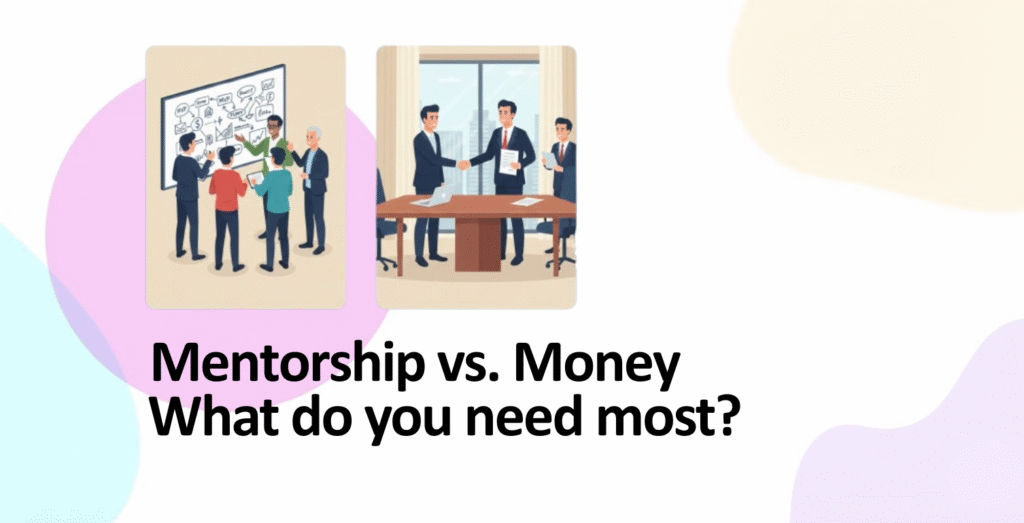
Master the accelerator vs direct VC decision (2025): Y Combinator vs Sequoia vs Techstars comparison, pros/cons analysis, time commitment (3-6 months), equity terms (5-10%), network value, decision framework for founders at different stages.
Table of Contents
- The Choice That Defines Your Company’s Path
- Accelerator Basics: What You’re Getting Into
- Direct VC Funding: The Alternative Path
- Head-to-Head Comparison: Accelerators vs Direct VC
- Top Accelerators in 2025: Y Combinator, Techstars, 500 Global
- Equity Terms: What You’re Actually Giving Up
- Time Commitment: Is 3-6 Months Worth It?
- Network Value: The Hidden Benefit of Accelerators
- Stage Fit: When Accelerators Make Sense vs When They Don’t
- Decision Framework: Should You Apply or Pitch Direct?
- Successful Paths: How Major Companies Chose
- The Hybrid Approach: Accelerator + Direct Funding
The Choice That Defines Your Company’s Path
One of the most important decisions early-stage founders make is not about product, market, or business model. It’s about which path to capital and mentorship: an accelerator or direct venture capital
This choice is more consequential than it seems. It affects your equity dilution, your time commitment, your network, your investor relationships, and ultimately your company’s culture and trajectory. Get it right and you accelerate growth 3x. Get it wrong and you might waste 6 months or give away more equity than necessary
The core tension: Accelerators offer structured programs, mentorship, and a cohort (community). Direct VCs offer capital and network without the program. Both are legitimate paths. Neither is universally “better.” Your stage, your market, your team, and your goals determine which makes sense
Accelerator Basics: What You’re Getting Into
A startup accelerator is a structured 3-6 month program designed to compress years of learning into months. You get: capital (typically $20K-$150K), mentorship, curriculum, access to investors, and a cohort of peer founders. In exchange, you give equity (typically 5-10%)
The Accelerator Model
What accelerators provide:
1. Capital ($20K-$150K depending on accelerator). This is typically enough runway for 3-6 months for a small team
2. Structured mentorship (weekly office hours, experienced mentors, curriculum)
3. Cohort community (20-100 other founders at same stage)
4. Investor access and Demo Day (pitch 200+ investors at end of program)
5. Perks and credits (AWS credits, legal services, etc., often worth $100K+)
6. Brand credibility (YC, Techstars brand opens doors)
Time commitment: 3-6 months of your life. Intense. Founders are expected to be present full-time in the accelerator office/community
Equity cost: 5-10%. Non-negotiable. All companies in a cohort give same % equity. No exceptions
Control loss: You give investors access to information (quarterly updates, financial data, board seat sometimes). Sunset clause typically applies (information rights end at Series A or after 1-3 years)
Direct VC Funding: The Alternative Path
Direct VC funding means pitching Sequoia, Accel, Andreessen Horowitz, Benchmark, or other venture firms directly (not through an accelerator). You get capital (typically $2M-$10M+), investor expertise, network access, and a board seat (usually)
No structured program. No mentorship curriculum. No cohort. Just capital and strategic advice from the VC
The Direct VC Model
What direct VCs provide:
1. Capital ($2M-$10M+ for Seed or Series A). Significantly more capital than accelerators
2. Strategic advice (VC partner becomes your advisor/board member)
3. Investor network (the VC helps you fundraise in future rounds)
4. Credibility (VC backing signals quality to customers, employees, partners)
5. No structured program (you figure out execution yourself)
6. Board seat (VC takes formal role in company governance)
Time commitment: Minimal structured program. Board meetings monthly or quarterly. Mostly self-directed. You need discipline
Equity cost: Typically 15-35% (much higher than accelerators). Negotiable based on your traction and VC conviction
Control: VC takes board seat. You share strategic decisions. But founders typically retain CEO seat and voting control (unless things go wrong)
Head-to-Head Comparison: Accelerators vs Direct VC
| Dimension | Accelerator (YC, Techstars) | Direct VC (Sequoia, Accel) | Winner Depends On |
|---|---|---|---|
| Capital Amount | $20K-$150K | $2M-$10M+ | Your burn rate. If you need lots of capital, direct VC. If bootstrapping early, accelerator |
| Equity Cost | 5-10% (fixed) | 15-35% (negotiable) | Accelerators more owner-friendly. But get less capital. Math it out |
| Time Commitment | 3-6 months intensive | Minimal (monthly board meetings) | Your schedule. Intensive vs flexible? |
| Mentorship | Structured curriculum, weekly office hours, peer mentors | Ad-hoc advice from VC partner | First-time founders benefit from structure. Experienced founders don’t need it |
| Network Access | Cohort + accelerator alumni + Demo Day investors | VC’s LP network + portfolio companies + industry contacts | Both give access. Different networks. Accelerator better for seed stage customers. VC better for Series A fundraising |
| Investor Stigma | Brand benefit (YC = credibility bump). Some old-school VCs discount YC | No stigma. Direct VC backing is premium brand | YC >> other accelerators. But still secondary to direct VC relationships |
| Speed to Capital | 3 weeks (apply) + 3 months (program) = 16 weeks total | 6-12 weeks to close from first meeting | Direct VC faster if you already have traction. Accelerator faster if you’re pre-product |
| Board Seat Required? | No formal board seat (though often advisor status) | Yes, typically (unless small check) | Accelerator preserves founder autonomy. VC adds structure and oversight |
| Future Funding Help | Accelerator doesn’t lead Series A. Network of VCs helps | VC often leads Series A (incentivized by ownership). Major advantage | Direct VC much stronger for Series A. Accelerator network helps but not guaranteed |
| Customization | One-size-fits-all program. Limited customization | Highly customized. Tailored to your situation | Depends if you need structure or freedom |
Top Accelerators in 2025: Y Combinator, Techstars, 500 Global
Y Combinator
Funding: $125K upfront + right to $375K additional at “Most-Favored Nation” terms (total up to $500K possible)
Equity: 7% + potential additional equity from optional investments
Duration: 12 weeks (intensive)
Cohort size: ~200 companies per batch (2 batches per year = 400/year)
Acceptance rate: ~2% (extremely competitive)
Network: 8,000+ YC alumni. Unmatched Demo Day. Best investor relationships
Outcomes: 4% of YC companies become unicorns (vs 2.5% for typical VC-backed startups). 72% of latest YC batch are AI companies (2025)
Verdict: Best accelerator globally. Unmatched network and brand. Extremely competitive. If you can get in, apply
Techstars
Funding: $20K cash + $100K optional convertible note (total $120K possible)
Equity: 6% common equity at next qualified financing ($250K+ funding round)
Duration: 3 months (intensive)
Cohort size: 10-20 companies per batch (multiple global locations)
Acceptance rate: ~1-2% (very competitive)
Network: 10,800+ founders. 74% of companies raise additional capital within 3 years. $30.4B total lifetime raised by alumni
Outcomes: Strong portfolio (Uber, Twilio, DigitalOcean, etc.). Mentor-driven approach
Verdict: Excellent choice. More founder-friendly terms than YC (lower equity). Strong global presence. Good alternative if YC rejects you
500 Global (formerly 500 Startups)
Funding: $150K investment (though $37.5K is charged as “tuition” for program, net $112.5K)
Equity: 6% stake
Duration: 4 months
Cohort size: 40-50 companies per batch
Acceptance rate: ~1-2%
Network: 2,700+ portfolio companies. $2.3B in AUM. Global investor network
Outcomes: Udemy, Talkdesk, Canva in portfolio. But less prestige than YC/Techstars in recent years
Verdict: Solid choice. Tuition model is controversial but net capital is competitive. Better for non-US founders (global focus)
Equity Terms: What You’re Actually Giving Up
The biggest hidden cost of accelerators is equity dilution. Let’s run the math
Equity Dilution Example
Scenario: You found company with 3 co-founders. You split 10M shares (100%)
Option 1: Y Combinator (7% equity)
Post-YC: You own 10M ÷ (10M + 745K) = 93%. Diluted 7%
Future Series A at $50M post-money valuation: You own 6.2M ÷ 14M = 44% of company
Option 2: Direct VC at Seed (20% equity for $1M)
Post-seed: You own 10M ÷ (10M + 2.5M) = 80%. Diluted 20%
Future Series A at $50M post-money: You own 10M ÷ 14M = 71% of company
The difference: With accelerator, you retain more ownership early but have less capital. With direct VC, you lose more ownership early but have more capital. At exit, the VC-backed founder likely owns more (if company succeeds) because they had more capital to execute
Key insight: Equity is worth nothing until exit. What matters is the denominator (total company value), not the numerator (your percentage). An accelerator founder with 44% of a $1B company is richer than an early dilution avoider with 60% of a $50M company
Time Commitment: Is 3-6 Months Worth It?
Accelerators demand 3-6 months of your life. Full-time. In their physical or virtual space. This is a massive opportunity cost. Is it worth it?
What You Do During Accelerator
- Weekly curriculum: Talks from experienced founders on product, growth, fundraising, hiring
- Mentor office hours: 1-on-1 meetings with advisors, experts, successful founders
- Product building: You ship features, get customer feedback, iterate
- Fundraising prep: Practice pitching. Refine deck. Build investor list
- Networking: Meet other founders. Potential customers, employees, partners
- Demo Day prep: Final weeks are intense pitch preparation for Demo Day
Is It Worth 3-6 Months?
If you’re pre-product: YES. Accelerators compress learning. What takes 12 months solo takes 3 months in accelerator. Huge ROI
If you already have traction: MAYBE. You’ve already learned most lessons. Accelerator might slow you down (you’re constrained to cohort pace)
If you’re fundraising ready: NO. Skip accelerator. Pitch direct VCs. Get capital and autonomy
Real opportunity cost: 3 months of your time is equivalent to $75K-$150K in salary (if you had a job). Accelerator gives $20K-$150K capital. But you learn much faster. The leverage ratio is high
Network Value: The Hidden Benefit of Accelerators
The capital is the headline. But the real value of accelerators is the network. This is the benefit people underestimate
Accelerator Network = Customers, Employees, Investors, Advisors
Y Combinator alumni network is insane: 8,000+ founders. They’ve collectively built companies worth $600B+. When you graduate, you can call any of them. Ask for advice. Get customer intros. Hire talent. Recruit as investors/advisors. This network compounds your growth 3-5x
Techstars network: More spread out globally. But 10,800+ founders and deep relationships with 74% of companies raising capital after program. Investors track Techstars companies. You get warm intros to Series A VCs through network
Direct VC network: Also valuable. But smaller. One VC partner can only connect you to their 50-100 relationships. Accelerator connects you to thousands. Plus peer network (your cohort) is instant support system for life
Why Network Matters for Growth
- Customer discovery: 30% of YC companies find their first customers through YC network
- Hiring: Recruiting becomes easier (YC alumni want to work at YC companies)
- Investor intros: Demo Day is where 50%+ of future Series A capital is raised
- Credibility: YC alumni tag on LinkedIn/website signals quality
- Peer learning: Other founders in cohort become lifelong advisors
Network value quantified: If accelerator network helps you land 1-2 early customers = $100K ARR impact. Help you hire 1-2 key employees. Help you raise Series A faster at better terms. The value is $500K-$1M+. Far exceeding the equity cost
Stage Fit: When Accelerators Make Sense vs When They Don’t
Accelerators Make Sense When:
- You’re pre-product or MVP stage: Have idea, no product yet. Accelerator helps you build and validate
- You’re a first-time founder: Accelerator curriculum teaches you fundraising, hiring, growth playbooks. Veterans don’t need this
- You need structure and accountability: Without accelerator, you’ll procrastinate. With cohort, you ship fast
- You want to maximize your network: YC network alone justifies 7% equity for many founders
- You can’t raise direct VC: You don’t have traction or warm intros to Series A VCs. Accelerator is easier path
- You want to compress learning: 3 months of 80-hour weeks = 1 year of learning solo
Direct VC Makes Sense When:
- You have $500K+ ARR: You’re beyond MVP stage. You need capital to scale, not mentorship to validate
- You have strong team: Serial founders, strong operators. Don’t need curriculum
- You have warm relationships with VCs: You can pitch Sequoia, Accel directly. Why wait 3 months for accelerator?
- You need capital immediately: Direct VC can move faster (6-12 weeks vs 16 weeks with accelerator)
- You want autonomy: Direct VC gives less structured oversight. You move at your own pace
- You’re in a niche market: Accelerator cohorts are generic. A direct VC specialist in your industry is better fit
Hybrid Can Make Sense When:
- You’re early stage but have some traction: Take accelerator for network and mentorship, then raise direct VC for Series A
- You want brand boost + capital: YC for credibility, then direct VCs interested because of YC stamp
Decision Framework: Should You Apply or Pitch Direct?
Here’s a practical framework to decide
Decision Tree
Question 1: Do you have paying customers?
NO → Go to Q2. YES → Do you have $100K+ ARR?
If YES to $100K+ ARR: You’re fundraising ready. Skip accelerator. Pitch direct VCs. You need capital, not mentorship
If NO (have customers but <$100K ARR): Go to Q2
Question 2: Do you have warm intros to Series A VCs?
YES → Do you have strong team with proven operators? YES → Skip accelerator. Pitch direct. NO → Consider accelerator to build team credibility
NO → Do you have credibility (founder previously exited, worked at FAANG, etc.)? YES → You can pitch direct. NO → Go to Q3
Question 3: Would 3-6 months of structured mentorship help you?
YES (first-time founder, need to learn fundraising, need structure) → Apply to accelerator (YC first, then Techstars)
NO (experienced founder, don’t need mentorship) → Pitch direct or bootstrap longer
Question 4: Do you need capital to execute?
YES (need to hire, can’t bootstrap) → Accelerator if you can get in. Direct VC if you have traction
NO (can bootstrap to product) → Bootstrap first, pitch direct VCs with traction later
Successful Paths: How Major Companies Chose
Stripe: Direct VC (Series A straight to VCs)
Stripe didn’t do an accelerator. Patrick and John Collison pitched directly to Peter Thiel and Sequoia. They had strong credibility (previous startup exits, top-tier engineers) and conviction in their idea. Result: Raised $2M Series A at incredible terms, maintained high ownership
Lesson: If you have credibility and traction, direct VC wins. You keep more equity
Instacart: Accelerator (Y Combinator) + Direct VC
Apoorva Mehta did YC S11. Got $20K seed. Built MVP. Did Demo Day. Series A investors were impressed by YC brand + progress. Raised from top-tier VCs. YC catalyzed growth
Lesson: Accelerator provides credibility boost and Demo Day launch pad. Hybrid path often optimal for first-time founders
Notion: Bootstrap + Angel Network + Direct VC
Ivan Zhao bootstrapped Notion for years before raising. Built product independently. Raised seed from angels + advisors. Series A from VCs once product-market fit was clear. No accelerator needed
Lesson: If you can bootstrap to product-market fit, you negotiate from position of strength with direct VCs. Higher valuation. Better terms
The Hybrid Approach: Accelerator + Direct Funding
Many founders do both: accelerator early, then direct VC later. This can be optimal
Timeline for Hybrid Approach
- Month 0-3: Apply to accelerator (YC, Techstars). Get accepted. Take $20K-$125K
- Month 3-6: Build product with accelerator support. Do Demo Day
- Month 6-12: Post-Demo Day, investors from accelerator network will outreach. You’re now in fundraising mode for Series A
- Month 12-16: Raise Series A from direct VCs (influenced by accelerator backing)
Cost: 7% equity to accelerator + 20-25% to Series A VC = 27-32% total dilution by Series A
Benefit: You get mentorship, network, capital from accelerator. Then capital and partnership from direct VC. Compound advantage
Alternative Hybrid: Direct Seed + Future Accelerator Role
Some founders raise seed from direct VCs, then apply to accelerator as a “visiting founder” to mentor and access network. Less common but works if you’re already scaling
Key Takeaways: Accelerator vs Direct VC
1. Accelerators vs Direct VC is a fundamental choice: Both are legitimate paths. Neither is universally “better.” Your stage, team, and goals determine which makes sense
2. Accelerators provide: Capital ($20K-$150K), Mentorship (structured curriculum), Cohort (community), Network (hundreds/thousands of founders), Demo Day (200+ investor access), Brand credibility (YC, Techstars). Cost: 5-10% equity + 3-6 months of your time
3. Direct VCs provide: More capital ($2M-$10M+), Strategic advice from VC partner, Investor network (for future rounds), Board seat, No structured program. Cost: 15-35% equity + ongoing governance involvement
4. Equity costs are different: Accelerators 5-10% (fixed), Direct VCs 15-35% (negotiable). But accelerators give less capital. Math: Would you rather 10% of $10M company or 30% of $50M company? The denominator matters more
5. Time commitment: Accelerators 3-6 months intensive (full-time). Direct VCs minimal structured time (monthly board meetings). First-time founders benefit from accelerator structure. Experienced founders don’t
6. Network is the hidden superpower of accelerators. YC alumni network worth $500K-$1M+ in equivalent customer intros, hiring help, Series A support. This network compounds over career
7. Y Combinator is the gold standard: $125K upfront + $375K optional. 7% equity. 2% acceptance rate. 8,000+ alumni. 4% unicorn rate (double typical VC). If you can get in, apply
8. Techstars is strong alternative to YC: $20K cash + $100K optional convertible. 6% equity. 1-2% acceptance. 10,800+ founders. 74% raise future capital. More mentor-driven
9. 500 Global (formerly 500 Startups): $150K investment (net $112.5K after tuition). 6% equity. Good for non-US founders. Global network. Less prestigious than YC/Techstars recently
10. Accelerators make sense when: Pre-product stage, first-time founder, need structure/accountability, want to maximize network, can’t raise direct VC, want to compress learning
11. Direct VC makes sense when: Have $500K+ ARR, strong team with operators, warm VC relationships, need capital immediately, want autonomy, operating in niche market where generalist accelerator doesn’t help
12. The hybrid approach works: Many successful startups do accelerator early (mentorship + network + brand) then direct VC for Series A (more capital + VC partnership). Total cost: ~27-32% dilution by Series A
13. Decision framework: Do you have paying customers? Do you have VC intros? Do you benefit from mentorship? Do you need capital? Answers determine accelerator vs direct path
14. Real examples: Stripe (direct VC straight away—high credibility founders), Instacart (YC then Series A—first-time founder path), Notion (bootstrapped then direct VC—strong product justifies better terms). Multiple paths work
15. Accelerator network effects are real: Demo Day connects you to 200+ investors. Cohort becomes lifelong peer group. Alumni introductions compound. One customer from YC network pays for equity cost. One co-hire from network is force multiplier
16. Equity dilution: Accelerator 7% vs Direct VC 20% looks bad but context matters. If accelerator capital + network let you build $50M company vs $5M bootstrapped company, the 7% cost was excellent trade
17. Time commitment ROI: 6 months in YC = 1-2 years of learning solo. For pre-product founders, this is the best investment of time. For experienced founders, it’s a sunk cost
18. Series A advantage: Direct VC founders often raise Series A from same fund (leading next round). Accelerator founders need to convince new VCs. But Demo Day exposure helps accelerator founders raise faster
19. Brand credibility: YC >> other accelerators in terms of investor signal. Techstars close second. 500 Global acceptable. Your own direct VC backing also carries weight (sometimes more than accelerator)
20. Action plan: (1) Assess your stage (pre-product? Paying customers? $100K+ ARR?). (2) Assess your credibility (first-time founder? Prior exits? VC network?). (3) Determine your needs (capital vs mentorship vs network). (4) If early + need mentorship, apply to YC/Techstars. (5) If have traction + VC intros, pitch direct. (6) If uncertain, apply accelerators (low downside, high upside) while also building direct VC relationships. Accelerators and VCs aren’t mutually exclusive—they’re complementary paths