
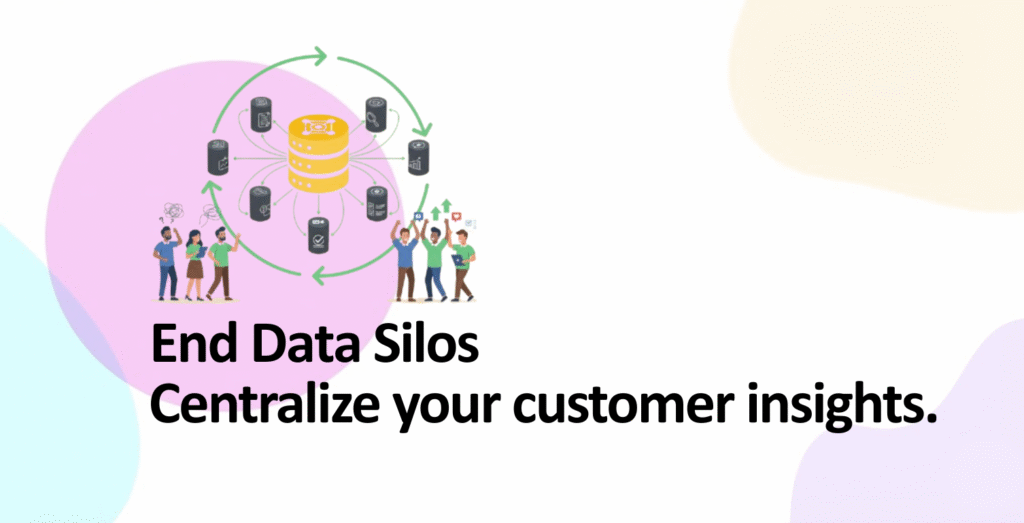
Master CDP strategy: why CDPs matter at scale, platform comparison (Segment free vs Tealium custom vs mParticle custom), implementation timelines (6-12 months), privacy compliance, GDPR/CCPA, and ROI 360%+.
Table of Contents
Why CDPs Matter (The Data Reality)
Your customer data is scattered across 15-20 different tools. Nobody owns it. Nobody uses it.
The CDP Reality for Growing Companies (2025 Data)
- 75% of companies that implement a CDP achieve measurable ROI within year one (Forrester, 2025)
- Companies using CDPs see 360% average ROI (some achieve 600%+ ROI)
- Average increase in customer lifetime value: 25% (from better segmentation and personalization)
- Reduction in customer acquisition cost: 15% (less wasted spend on cold audiences)
- Companies without CDPs waste 40% of their marketing budget on cold audiences (no segmentation, no personalization)
- 72% of companies with AI-powered CDPs see significant ROI increase (predictive analytics work)
- CDP market projected to grow to $37.11 billion by 2030 (30.7% CAGR) – it’s not optional at scale
The Problem a CDP Solves
- Customer data is fragmented: Marketing tool, CRM, analytics, email platform, advertising platform. No single view of customer
- You don’t know your best customers: No unified scoring. High-value customers get same treatment as tire-kickers
- Marketing campaigns miss: Can’t segment by behavior across touchpoints. Generic campaigns convert 3-5%
- Privacy compliance is manual: GDPR/CCPA requests require digging through 10 tools. Error-prone. Risky
- Attribution is guesswork: Which marketing channel actually drove the sale? You can’t tell
What a CDP Does
- Unifies customer data from all touchpoints (web, mobile, email, CRM, advertising) into one profile
- Creates real-time identity resolution (knows John on web = John in CRM = John in email)
- Enables instant segmentation (high-value customers, at-risk customers, ready-to-buy, etc.)
- Activates in real-time (sends personalized email within seconds of trigger event)
- Enforces compliance (GDPR right-to-be-forgotten = one click, not manual process)
- Integrates with all your tools (HubSpot, Salesforce, Facebook, email, ad platforms, etc.)
Business Benefits & ROI
Real-World CDP Impact (2025 Benchmarks)
| Metric | Before CDP | After CDP | Improvement |
|---|---|---|---|
| Email Open Rate | 18-22% | 28-35% | +50-70% |
| Email Click Rate | 2-3% | 4-6% | +100-200% |
| Conversion Rate | 1-2% | 3-5% | +150-400% |
| Customer Lifetime Value | $1,000-3,000 | $1,250-3,750 | +25% |
| Customer Acquisition Cost | $50-150 | $43-128 | -15% |
| Marketing ROI | $2-3 per $1 spent | $5-8 per $1 spent | +150-300% |
| Time to Deploy Campaign | 3-4 weeks | 3-5 days | -85% faster |
Why These Improvements Happen
- Segmentation works: Instead of blasting all users, you send right message to right person at right time
- Personalization converts: “Hi John, you viewed [Product X] on Tuesday. Here’s a 10% discount” converts 10x better than generic email
- Predictive analytics identify ready-to-buy users: AI identifies which users are highest likelihood to convert in next 7 days
- Reduce unsubscribes: Relevant campaigns = fewer people unsubscribing
- Faster team efficiency: Marketers stop manually exporting lists and building segments. Just click “activate this audience”
Platform Comparison (2025)
| Feature | Segment | Tealium | mParticle |
|---|---|---|---|
| Pricing Model | Free tier + custom | Custom pricing only | MTU-based (custom) |
| Free Plan | Yes (generous for startups) | No | No |
| Starting Price (Estimated) | $120-600/mo (Connections) | $5K-20K/mo (custom) | $10K-50K/mo (custom) |
| Best For | Startups, developers, rapid deployment | Enterprise, omnichannel, tag management | Mobile-first, behavioral personalization |
| Implementation Timeline | Days to weeks (developer-friendly) | Weeks to months (complex setup) | Weeks to months (mobile-focused) |
| Integrations | 300+ sources, 200+ destinations | 1,300+ vendors (tag manager) | 800+ integrations |
| Real-Time Activation | Yes (strong) | Yes (excellent) | Yes (excellent) |
| AI/ML Capabilities | Limited (basic predictive) | Tealium Predict (advanced ML) | Advanced AI (behavioral) |
| Privacy/Compliance | Good (GDPR, CCPA ready) | Excellent (enterprise compliance) | Excellent (consent management) |
| Deployment Speed | Fast (1-2 weeks) | Medium (4-12 weeks) | Medium (4-12 weeks) |
Detailed Comparison
Segment (Best for Startups)
- Pricing: Free tier (great for testing) + custom pricing starts ~$120/mo (Connections plan)
- Why choose: Fastest implementation. Developer-friendly APIs. Largest app library (300+ sources, 200+ destinations)
- Best for: SaaS, e-commerce, tech companies. Companies that want rapid deployment
- Timeline: 1-2 weeks to production (fastest of the three)
- Limitation: Less advanced ML/AI than competitors. Better for data collection than prediction
Tealium (Best for Enterprise)
- Pricing: Custom only. Estimated $5K-20K/month depending on data volume and use cases
- Why choose: Complete tag management + CDP. Native audience building. Machine learning (Tealium Predict)
- Best for: Large enterprises. Multi-channel retailers. Complex omnichannel operations
- Timeline: 4-12 weeks (slower but most comprehensive)
- Advantage: All-in-one solution. Don’t need separate tag manager
mParticle (Best for Mobile-First)
- Pricing: MTU-based (Monthly Tracked Users). Custom pricing, estimated $10K-50K/mo
- Why choose: Built for mobile. Hyper-personalization. Advanced behavioral analytics
- Best for: Mobile apps, mobile-first companies, behavioral personalization at scale
- Timeline: 4-12 weeks (complex but powerful)
- Advantage: Best for mobile user journey tracking and personalization
Quick Decision Guide
- Choose Segment if: You want to start immediately. You need fast deployment. You’re a startup with limited budget. You prefer ease-of-implementation
- Choose Tealium if: You need complete omnichannel solution. You’re enterprise-scale. Tag management matters. You need advanced ML
- Choose mParticle if: Your business is mobile-first. Behavioral personalization is critical. You need sophisticated AI
Implementation Timeline & Costs
Typical CDP Implementation Phases (6-12 Months)
| Phase | Timeline | Key Activities | Outcome |
|---|---|---|---|
| Phase 1: Foundation | Weeks 1-4 | Vendor selection, architecture design, team planning, stakeholder alignment | Vendor contract signed, architecture documented, project roadmap |
| Phase 2: Build | Weeks 5-12 | Data collection setup, API integration, identity resolution configuration, data governance | Data flowing into CDP, identity resolution working, first unified profiles |
| Phase 3: Activate | Weeks 13-20 | Audience segmentation, campaign setup, destination activation, testing | First activated segment, pilot campaigns running, real-time personalization live |
| Phase 4: Scale | Weeks 21-24+ | Optimization, new use cases, advanced analytics, continuous improvement | Full utilization, measurable ROI, repeatable process |
Cost Breakdown (First Year, $10M Revenue Company)
- Platform license: $5K-50K/month = $60K-600K/year (depends on vendor and data volume)
- Implementation services: $10K-100K (professional services, consulting, setup)
- Integration/API work: $5K-50K (connecting to your existing tools)
- Training + internal resources: $10K-30K (team training, ongoing support)
- Data management + governance: $5K-20K (ensuring data quality, compliance)
- Total Year 1 Cost: $90K-800K (depends on complexity)
Time Investment Required
- Project manager (full-time): 12 months
- Data engineer: 3-6 months (implementation phase)
- Marketer/analyst: 2-4 months (setup and optimization)
- Total person-months: 17-26 months of effort (can be distributed across team)
ROI Timeline (When Does It Payoff?)
- Month 3: Full deployment complete. Initial insights visible
- Month 6: First campaigns run with segmentation. 40-50% of ROI target achieved
- Month 12: Full optimization complete. 100%+ of ROI target achieved (usually 360%+ ROI)
- Month 24: Compounding benefits. Additional use cases activated. ROI continues growing
Privacy & Compliance (GDPR, CCPA, State Laws)
Regulatory Landscape (2025)
- GDPR (EU): Must have explicit consent. Right to be forgotten. Data portability
- CCPA (California): Transparency + consumer control. Can opt-out of data sale. Cannot use “dark patterns”
- CPRA (California): Expands CCPA. Adds sensitive data protections. Risk assessments required
- 20+ state laws: Virginia, Colorado, Connecticut, Utah, etc. All have similar requirements to GDPR/CCPA
How CDPs Handle Compliance
- Consent management: CDP captures and stores user consent. Enforces it in real-time
- Right to be forgotten: One-click deletion of user across all systems (GDPR requirement)
- Data retention policies: CDP auto-deletes data after specified retention period
- Data access requests: Users request their data. CDP provides it in portable format
- Automated logging: Every data action logged for audit trails (required for compliance audits)
Privacy-First Implementation Strategy
| Step | Action | Timeline |
|---|---|---|
| 1. Privacy Audit | Map all data sources, identify sensitive data, assess current compliance gaps | Week 1-2 |
| 2. Consent Layer | Implement consent management. Capture yes/no for each data use | Week 3-4 |
| 3. Data Governance | Define retention periods. Set up automated deletion. Create audit logs | Week 5-8 |
| 4. Process Workflows | Implement “right to be forgotten” process. Data access request process | Week 9-12 |
| 5. Testing + Audit | Test all compliance workflows. Document for regulatory review | Week 13-16 |
CDP Platform Privacy Features (2025)
- Segment: GDPR-ready, CCPA-ready. Good consent management. Audit logs
- Tealium: Enterprise-grade compliance. Advanced consent management. CCPA/GDPR optimized
- mParticle: Excellent consent management. Granular privacy controls. Built-in compliance workflows
When to Adopt a CDP (Decision Framework)
Stage-Based CDP Adoption
Pre-PMF (Product-Market Fit): Don’t use a CDP yet. Your data is too messy. Use a simple analytics tool (GA4, Mixpanel) first
Early Stage ($1-5M revenue, <50 employees): Consider Segment Free or basic plan. You need to track behavior across channels. Not critical yet but good to start early
Growth Stage ($5-50M revenue, 50-200 employees): CDP becomes essential. You have complex customer journeys. Multiple channels. Segment Professional or basic Tealium makes sense
Scale Stage ($50M+ revenue): CDP is mandatory. Complex attribution. Advanced personalization. Compliance requirements. Tealium or mParticle enterprise required
Red Flags (When You DEFINITELY Need a CDP)
- Email team and analytics team don’t talk: Segmentation in email is manual, not data-driven
- You have >5 marketing channels (web, email, mobile app, SMS, push) and no way to track customers across them
- Compliance issues: You’ve gotten complaints about GDPR/CCPA compliance or had data access requests you couldn’t fulfill
- Manual data exports every week: Your analyst spends 10+ hours/week building audience lists manually
- Campaign performance is unexplained: You don’t know which campaigns convert because data is siloed
Green Lights (When You’re Ready)
- You have >100K customers (need segmentation automation at this scale)
- Multiple teams use customer data (marketing, sales, CS, product all need unified view)
- You’re 80%+ ready to capitalize on insights (you have good tools to activate segments)
- Budget is available ($100K+ in year 1 is realistic investment)
- Team is aligned (everyone agrees CDP is important, not just marketing pet project)
Key Takeaways: CDP Strategy
1. CDP ROI is 360% average (some achieve 600%+). This is real money. On a $100K/year investment, you expect $360K-600K additional revenue. That’s the business case.
2. 75% of companies implementing a CDP achieve ROI within year one. Success is achievable if you plan correctly.
3. Customer lifetime value increases 25%. CAC decreases 15%. These compound over time. The impact grows
4. Implementation takes 6-12 months, not 3 months. Plan for full year. Expect delays. Budget accordingly
5. Choose Segment for fast deployment ($120-600/mo). Choose Tealium for enterprise ($5K-20K/mo). Choose mParticle for mobile-first ($10K-50K/mo). Your use case determines the platform
6. Email open rates increase 50-70% with segmentation. Conversion rates increase 150-400%. These aren’t marginal gains. These are transformational
7. Privacy compliance is built-in to CDPs. GDPR/CCPA is easier with CDP than without. Regulatory risk decreases
8. First 6 months are hard. Months 7-12 deliver the ROI. Don’t expect immediate results. Patience pays off
9. You need dedicated project leader + data engineer for 6-12 months. This is not something to delegate to an analyst as side project. It requires full-time focus
10. Start at $5-10M revenue. Any smaller and your data is too immature. Any larger and you’re leaving money on table
11. Email + audience segmentation is your first use case. That’s where 50%+ of ROI comes from. Don’t try to do everything at once
12. Year 1 cost is $90K-800K. Year 2 cost is $60K-600K (ongoing). ROI kicks in month 6-12, scales through month 24+
13. Your team needs training. Budget 2-4 weeks for team to get comfortable. Don’t underestimate adoption time
14. Compliance is your ally, not your enemy. CDP makes GDPR/CCPA easier, not harder. Privacy-first data strategy is the future
15. Action: Calculate your potential ROI. 360% × your annual marketing budget = money on the table. Is that bigger than $100K? If yes, start CDP conversation this quarter.