How a Mentor Helps You Validate Your Startup Idea Before You Invest
Every year, thousands of entrepreneurs leave their jobs, invest their savings, hire developers, build products, launch websites, and spend months chasing a dream—only to realize that the market never wanted what they built.
The harsh reality is that most startups don’t fail because the founders lack passion or intelligence. They fail because they build the wrong product, for the wrong customer, at the wrong time.
According to various startup studies, one of the leading reasons startups fail is lack of market need. Founders often fall in love with their ideas before validating whether customers are willing to pay for them.
This is where a Mentor or Business Coach can make a profound difference.
A good startup Mentor or Business Coach doesn’t tell you whether your idea is “good” or “bad.” Instead, they help you ask the right questions, challenge your assumptions, identify blind spots, and validate your idea before you invest significant time, money, and emotional energy.
At Growth Gurukul, idea validation is not a one-time exercise. It is a structured process that helps founders move from excitement to evidence.
Why Most Founders Validate Their Ideas Incorrectly
One of the biggest mistakes first-time founders make is assuming that their own excitement reflects market demand.
A founder notices a problem in daily life and immediately concludes, “If I face this problem, millions of others must have it too.”
Sometimes that’s true.
Most of the time, it isn’t.
Many founders validate their idea by asking friends and family whether they like it.
The answers are almost always positive.
“That’s a great idea.”
“I would definitely use it.”
“You should build it.”
Unfortunately, compliments are not customers.
People often encourage entrepreneurs because they appreciate the effort—not because they intend to buy the product.
A Mentor or Business Coach helps separate emotional validation from commercial validation.
Instead of asking whether people like the idea, the conversation shifts to much more important questions:
- Who experiences this problem?
- How frequently does the problem occur?
- What is the financial impact of the problem?
- Are customers already paying someone to solve it?
- Why would they switch to your solution?
These questions often reveal insights that completely reshape the startup.
A Great Idea Solves an Expensive Problem
One of the first discussions during Mentorship or Business coaching focuses on the problem itself.
Many startups begin with a solution and then try to find a problem.
Successful startups do the opposite.
They identify a painful problem first.
Imagine two founders.
The first wants to build another task management application because existing apps look outdated.
The second wants to reduce inventory losses for pharmaceutical distributors by using AI.
Which idea has a stronger business opportunity?
The second founder is solving an expensive business problem.
Businesses lose money every day because of inventory errors.
If the solution works, customers have a strong reason to pay.
A Mentor or Business Coach helps founders distinguish between interesting ideas and valuable business opportunities.
Often, a slight change in positioning transforms an average idea into a compelling startup.
Understanding Your Customer Before Building Your Product
Many founders spend months building products without speaking to enough potential customers.
By the time the product launches, they discover that customers wanted something completely different.
Mentorship or Business Coaching encourages founders to slow down before speeding up.
Instead of immediately building software or manufacturing products, founders are guided to understand customer behaviour.
Questions explored include:
- Who exactly is your customer?
- Who makes the buying decision?
- What alternatives are they using today?
- What frustrates them about existing solutions?
- What would convince them to switch?
Sometimes the customer isn’t who the founder initially imagined.
For example, an EdTech founder may believe students are the customer.
After research, it becomes clear that parents make the buying decision.
That single insight changes marketing, pricing, branding and product design.
Analysing Competition Without Copying It
Many founders fear competition.
Experienced Mentor or Business Coachs view competition differently.
Competition is evidence that customers already spend money solving the problem.
The objective isn’t to avoid competition.
The objective is to understand it.
During Mentorship or Business Coaching, founders learn to analyse competitors from multiple perspectives.
What products do they offer?
What pricing strategy do they follow?
What customer segments do they serve?
What complaints do customers have?
Where are competitors weak?
What opportunities remain underserved?
This analysis often uncovers opportunities that are invisible at first glance.
Sometimes the opportunity isn’t building a completely new product.
It’s building a better experience, serving an ignored customer segment or simplifying a complicated solution.
Validating Market Size and Growth Potential
An excellent product in a tiny market rarely becomes a large business.
Mentor or Business Coachs therefore encourage founders to think beyond today’s customers.
Questions include:
Can this market grow over the next decade?
Is customer demand increasing?
Are there regulatory or technological changes creating new opportunities?
How many customers realistically exist?
Can the business scale geographically?
Founders frequently overestimate market size.
Saying “Everyone needs this” is not market analysis.
A Mentor or Business Coach helps founders estimate realistic market opportunities using industry data, customer segmentation and adoption patterns.
This becomes especially important while preparing for investors, who always ask about market opportunity.
Building a Sustainable Business Model
Having customers is different from having a profitable business.
Many startups generate revenue but still lose money.
Mentorship or Business Coaching helps founders evaluate:
How will the company earn revenue?
What are the customer acquisition costs?
What is the lifetime value of a customer?
How long does it take to recover acquisition costs?
Will margins improve as the company grows?
Can pricing sustain future expansion?
Sometimes a founder discovers that although customers love the product, the economics simply don’t work.
Discovering this early can save years of effort.
Testing Assumptions Before Investing
Every startup is built on assumptions.
Customers will buy.
Pricing will work.
Marketing will generate leads.
Sales will convert.
Technology will scale.
Rather than accepting these assumptions, Mentor or Business Coachs encourage founders to test them one by one.
Instead of spending ₹25 lakh building a product, they may recommend:
Building a landing page.
Running digital advertisements.
Collecting enquiries.
Conducting customer interviews.
Creating prototypes.
Offering pilot projects.
These experiments provide real evidence before significant investments are made.
Practical Example: Two Founders, Two Outcomes
Consider two entrepreneurs planning to build an AI-powered recruitment platform.
Founder A immediately hires developers and spends ₹40 lakh building software.
After launch, HR managers refuse to change their existing recruitment systems.
The startup struggles.
Founder B spends three months interviewing HR heads across different industries.
During these discussions, one pattern emerges.
Recruiters aren’t looking for another hiring platform.
They desperately need automated interview scheduling.
Founder B changes direction before writing a single line of code.
Within months, paying customers begin using the product.
The difference wasn’t intelligence.
It was validation.
How a Mentor or Business Coach Helps Throughout the Validation Journey
At Growth Gurukul, Mentorship or Business Coaching focuses on asking difficult questions before expensive decisions are made.
Instead of telling founders what business to build, the Mentor or Business Coach works alongside them to evaluate every important assumption.
This includes:
Understanding customer pain points.
Evaluating market opportunity.
Conducting competitor analysis.
Building a differentiated value proposition.
Validating pricing.
Testing customer willingness to pay.
Refining the business model.
Identifying risks.
Prioritising features.
Preparing a roadmap for execution.
Most importantly, founders receive an independent perspective.
When you’ve worked on an idea for months, it becomes difficult to see weaknesses.
A Mentor or Business Coach provides objective feedback while helping strengthen the opportunity rather than discouraging entrepreneurship.
Common Mistakes Founders Make
Some of the most common mistakes observed among first-time founders include:
- Building products before speaking to customers.
- Believing friends and family represent market validation.
- Underestimating competitors.
- Overestimating market size.
- Competing only on price.
- Ignoring unit economics.
- Assuming customers will automatically switch.
- Raising funding before validating demand.
- Falling in love with technology instead of customer problems.
Avoiding even a few of these mistakes can save significant time, money and frustration.
Key Takeaways
Before investing heavily in your startup, ensure you can confidently answer these questions:
✔ Does the problem genuinely exist?
✔ Are customers willing to pay for a solution?
✔ Is the market large enough?
✔ How are customers solving the problem today?
✔ Why is your solution better?
✔ Can your business generate sustainable profits?
✔ Have you tested your assumptions?
✔ Do you understand your competitors?
✔ Have you spoken to enough potential customers?
If the answer to any of these questions is “I’m not sure,” your startup idea probably needs further validation.
Start Your Startup Journey with the Right Foundation
At Growth Gurukul, we believe that founders don’t need more motivation—they need better decision-making.
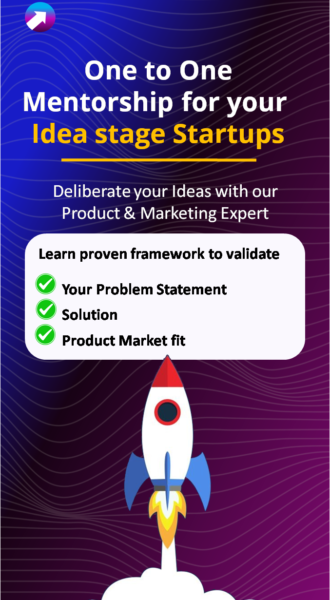
Our one-to-one Mentorship or Business Coach helps entrepreneurs validate ideas, build products customers actually want, design scalable business models, prepare investor-ready business plans and build businesses capable of long-term growth.
Whether you’re at the idea stage or preparing to launch your startup, having an experienced Mentor or Business Coach can significantly reduce costly mistakes and improve your chances of building a successful business.
Before you invest your savings, invest time in validating your idea. It could be the most valuable decision you make as a founder.
Frequently Asked Questions
Why should I validate my startup idea before building the product?
Validating your idea ensures there is genuine customer demand before investing significant time and money. It reduces the risk of building a product that few people want to buy.
How does a startup Mentor or Business Coach help validate an idea?
A Mentor or Business Coach helps you assess customer problems, evaluate market demand, analyse competitors, refine your value proposition, test pricing, and challenge assumptions using structured feedback and real-world experience.
What is product-market fit?
Product-market fit is achieved when your product solves a meaningful problem for a well-defined customer segment, and those customers are willing to pay for it consistently.
How many customer interviews should I conduct?
While the exact number depends on the industry, speaking with at least 20–30 potential customers often reveals patterns in customer behaviour, buying decisions, and unmet needs.
Can I raise funding with only an idea?
Some founders do raise funding at the idea stage, but investors typically look for strong market validation, a compelling business model, capable founders, and evidence that the idea addresses a significant market opportunity.