How a Startup Mentor Helps You Find a High-Potential Market Opportunity Before You even Start
Every startup begins with an idea.
Unfortunately, most ideas never become successful businesses—not because the founders lack passion, but because they pursue opportunities that don’t have enough market demand.
Many first-time founders fall in love with their product before understanding whether customers actually need it. They spend months building features, designing logos, and launching websites, only to discover that very few people are willing to pay.
This is where startup mentors make the biggest difference.
A mentor doesn’t simply help improve your business plan. They help you identify the right opportunity before you invest your time, money, and energy.
Instead of asking:
“Is this a good product?”
An experienced mentor asks:
- Is this solving an expensive problem?
- Who feels this pain every day?
- Are customers already spending money?
- Can this market become large enough?
- Can your startup create a competitive advantage?
These questions often determine whether your startup survives.
In this article, we’ll explore how startup mentors help founders identify high-potential market opportunities and dramatically improve the odds of building a successful business.
Why Most Founders Choose the Wrong Market
Many entrepreneurs start with technology rather than customer problems.
Some copy successful foreign startups.
Others build products because they personally like the idea.
While passion is important, markets—not ideas—create successful companies.
Common reasons founders choose poor opportunities include:
- Solving a problem that isn’t important
- Targeting customers with limited purchasing power
- Choosing saturated markets without differentiation
- Ignoring industry trends
- Falling in love with their own solution
- Confusing compliments with genuine demand
A mentor helps founders shift from idea-first thinking to market-first thinking.
What Makes a Market Opportunity High Potential?
Not every market is worth entering.
Experienced startup mentors evaluate opportunities using several critical parameters.
1. Large Customer Pain
The strongest businesses solve painful problems.
Ask:
- What keeps customers awake at night?
- What wastes their money?
- What slows their business?
- What frustrates them daily?
The more painful the problem, the easier it becomes to sell the solution.
2. Growing Market
Mentors prefer markets that are expanding rather than shrinking.
Examples include:
- AI automation
- Climate technology
- HealthTech
- Financial inclusion
- B2B SaaS
- Creator economy
- MSME digitization
Growing markets provide more room for startups to scale.
3. Paying Customers
Many founders validate ideas using likes, comments, or surveys.
Mentors focus on one thing:
Who is already paying for this problem?
Customers paying competitors indicate real demand.
4. Ability to Differentiate
If customers cannot explain why your solution is better, your startup becomes another commodity.
Mentors identify opportunities where startups can create advantages through:
- Better pricing
- Better technology
- Better experience
- Faster delivery
- Superior customer support
- Unique business models
5. Scalability
A mentor evaluates whether the business can grow beyond a small local market.
Questions include:
- Can this expand nationally?
- Can technology automate operations?
- Can revenues grow faster than costs?
Scalable opportunities attract investors.
How a Startup Mentor Identifies Hidden Market Opportunities
Finding opportunities isn’t luck.
It is a structured process.
Experienced mentors use multiple frameworks.
Studying Industry Trends
Markets constantly evolve.
Mentors monitor:
- Government policies
- Consumer behaviour
- Technology shifts
- Regulatory changes
- Digital transformation
- Economic cycles
These changes create new opportunities long before they become obvious.
Looking for Market Gaps
Large companies often ignore small customer problems.
Mentors ask:
- Which customers remain underserved?
- Which industries still use manual processes?
- Where are customers frustrated?
Many billion-dollar startups began by solving ignored problems.
Analysing Customer Behaviour
Customers often reveal opportunities through complaints.
Mentors encourage founders to observe:
- Customer reviews
- Social media discussions
- Reddit communities
- Industry forums
- Support tickets
- Sales objections
Patterns reveal unmet needs.
Evaluating Competition
Contrary to popular belief, competition is not always bad.
No competitors may indicate no market.
Mentors analyse:
- Pricing
- Positioning
- Customer experience
- Product gaps
- Distribution
- Reviews
The goal isn’t avoiding competition.
The goal is finding weaknesses competitors have ignored.
How a Mentor Helps Validate a Market Opportunity
Great founders validate before they build.
Mentors reduce uncertainty through practical validation.
Customer Interviews
Rather than pitching products, mentors encourage founders to ask:
- What problem frustrates you most?
- How do you solve it today?
- How much does it cost?
- What would an ideal solution look like?
The focus remains on understanding pain—not selling.
Landing Page Testing
Before building software, mentors often recommend:
- Creating a simple landing page
- Explaining the solution
- Running digital advertisements
- Measuring sign-ups
Interest before development reduces risk.
Pre-Sales
The strongest validation?
Customers willing to pay.
Mentors often advise founders to secure advance orders before developing the full product.
If customers won’t pay now, they may not pay later.
MVP Validation
Instead of spending ₹50 lakh building software, mentors recommend launching a Minimum Viable Product (MVP).
An MVP helps founders learn:
- Which features matter
- Which customers buy
- What pricing works
- How users behave
Learning early saves money.
How a Mentor Challenges Founder Assumptions
Founders naturally become emotionally attached to ideas.
Mentors provide objective thinking.
They ask uncomfortable questions like:
- Why would customers switch?
- What proof do you have?
- How many interviews have you conducted?
- Why now?
- Can competitors copy this?
- What happens if your assumptions are wrong?
These questions prevent expensive mistakes.
Founder Examples
Airbnb
The founders believed people would stay in strangers’ homes.
Instead of building a massive platform immediately, they validated demand by renting space in their own apartment during a conference.
A mentor would describe this as validating behaviour before scaling.
Dropbox
Dropbox initially created a demonstration video rather than building the complete product.
Thousands joined the waiting list.
Demand was validated before large investments.
Zomato
Initially started as an online restaurant menu platform.
Over time, customer behaviour revealed opportunities in food discovery, reviews, and delivery.
Continuous market observation helped reshape the business.
Razorpay
The founders identified that Indian businesses struggled with online payment integration.
Instead of creating another payment gateway, they simplified onboarding and developer experience.
The opportunity wasn’t merely payments.
It was removing friction.
How a Mentor Helps You Build Around the Opportunity
Finding an opportunity is only the beginning.
Mentors help founders convert opportunities into businesses.
Customer Positioning
Who should buy first?
Mentors define the ideal customer profile rather than targeting everyone.
Value Proposition
Why should customers choose you?
Mentors refine messaging until the answer becomes obvious.
Pricing Strategy
Many startups underprice.
Others overprice.
Mentors evaluate pricing using customer value rather than founder assumptions.
Go-To-Market Strategy
A brilliant product fails without customers.
Mentors help founders choose:
- Digital acquisition
- Partnerships
- Referrals
- Channel sales
- Inside sales
- Community building
The market opportunity becomes a revenue opportunity.
Common Mistakes Founders Make While Choosing a Market Opportunity
Avoid these frequent errors:
Building Before Validating
Many founders invest months before speaking to customers.
Targeting Everyone
If everyone is your customer, nobody is.
Ignoring Customer Pain
Interesting problems rarely become profitable businesses.
Painful problems do.
Chasing Trends Blindly
AI, Blockchain, or Web3 alone aren’t opportunities.
Customer problems are.
Ignoring Competition
Studying competitors helps identify differentiation.
Ignoring them creates blind spots.
Seeking Validation from Friends
Friends encourage.
Customers pay.
The two are not the same.
How Growth Gurukul Mentors Help Founders Find Winning Opportunities
At Growth Gurukul, mentoring begins long before business plans or fundraising.
Founders work with experienced startup mentors to:
- Identify high-potential industries
- Evaluate market size
- Understand customer behaviour
- Conduct structured validation
- Define target customers
- Build compelling value propositions
- Validate pricing
- Create scalable business models
- Prepare for investor conversations
Rather than guessing, founders make informed decisions backed by market insights and proven startup frameworks.
The objective isn’t simply launching another startup.
It’s building a business customers love and investors trust.
Key Takeaways
- Successful startups begin with strong market opportunities—not just great ideas.
- Mentors help founders evaluate customer pain, market demand, scalability, and competition.
- Validation before development significantly reduces startup risk.
- Customer interviews, MVPs, landing pages, and pre-sales provide real market evidence.
- Experienced mentors challenge assumptions that founders often overlook.
- The right market opportunity can save years of effort and dramatically improve startup success.
Ready to Find the Right Startup Opportunity?
If you’re serious about building a startup, don’t rely on assumptions.
Work with experienced mentors who have helped founders validate ideas, identify profitable markets, and build investor-ready businesses.
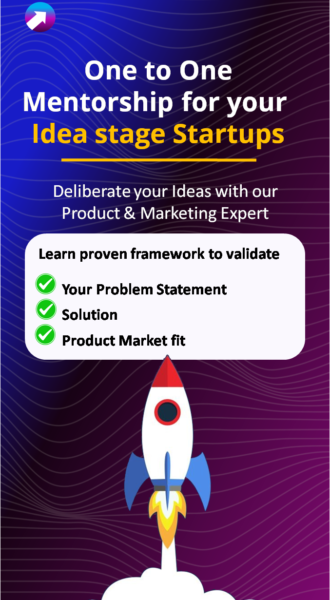
Growth Gurukul’s One-to-One Startup Mentorship Program helps aspiring entrepreneurs move from idea to opportunity, from validation to execution, and from uncertainty to clarity.
Book a mentoring session today and discover whether your startup idea has the potential to become a scalable business.
Frequently Asked Questions (FAQ)
How does a startup mentor help identify market opportunities?
A startup mentor analyses customer problems, market size, industry trends, competition, and scalability to help founders identify opportunities with genuine business potential.
Why is market validation important before building a startup?
Validation ensures customers actually need the solution and are willing to pay for it, reducing the risk of building products that fail in the market.
What is the best way to validate a startup idea?
Customer interviews, landing pages, MVPs, pre-orders, and pilot customers are among the most effective methods for validating startup ideas.
Should I choose a market with no competition?
Not necessarily. Competition often indicates existing demand. The goal is to differentiate your solution rather than avoid competitive markets entirely.
How does a mentor reduce startup risk?
Mentors help founders avoid common mistakes, challenge assumptions, validate opportunities early, refine business models, and develop practical go-to-market strategies.
When should I approach a startup mentor?
The ideal time is before investing heavily in product development. Early mentoring helps founders identify better opportunities, validate ideas faster, and save valuable time and capital.