How a Startup Mentor Helps You Choose the Right Startup Idea
Starting a business is one of the most exciting journeys you can embark upon. The thought of building something meaningful, creating value for customers, generating wealth, and becoming your own boss motivates millions of aspiring entrepreneurs every year. Yet, before you write a business plan, hire your first employee, or even think about raising funds, there is one decision that will influence everything that follows—choosing the right startup idea.
Contrary to popular belief, successful startups are not built because someone had a revolutionary idea. They are built because founders identify the right opportunity, solve a meaningful problem, validate customer demand, and execute consistently over time. Many billion-dollar companies today started with simple ideas that evolved through continuous learning and market feedback.
Unfortunately, thousands of startups fail every year because founders choose ideas based on excitement rather than evidence. They spend months building products, investing their savings, and assembling teams without first validating whether customers actually need what they are building.
This is precisely where an experienced startup mentor or business coach becomes invaluable.
A startup mentor, business coach, or startup advisor does not simply suggest business ideas. Instead, they help founders evaluate opportunities objectively, identify market gaps, validate assumptions, understand customers, and build businesses on strong commercial foundations rather than emotions or trends.
At Growth Gurukul, we believe choosing the right startup idea is not a moment of inspiration—it is a structured process of research, validation, analysis, and strategic thinking. Working with a business coach for startups significantly improves your chances of selecting an idea that not only excites you but also has the potential to become a scalable and profitable business.
Why Choosing the Right Startup Idea Is More Important Than Building the Product
Many first-time entrepreneurs believe that execution is everything. While execution is undoubtedly critical, executing the wrong idea exceptionally well still leads to failure.
Imagine spending twelve months building a sophisticated mobile application only to discover that customers prefer solving the same problem through a simple WhatsApp group. Or investing lakhs of rupees manufacturing an innovative product that customers find interesting but are unwilling to purchase.
The problem wasn’t poor execution.
The problem was choosing the wrong opportunity.
Every startup requires years of commitment, financial investment, emotional resilience, and continuous learning. If the business idea itself lacks commercial viability, every subsequent decision becomes increasingly difficult.
An experienced business coach encourages founders to spend more time evaluating opportunities before investing heavily. Instead of rushing into execution, founders learn how to answer important questions such as:
- Does this idea solve a genuine customer problem?
- Are customers already spending money to solve this problem?
- Is the market large enough?
- Can this business become profitable?
- Can it scale over the next five to ten years?
- Does this opportunity align with my strengths?
Finding convincing answers to these questions often determines whether a startup becomes a successful company or an expensive lesson.
A Startup Mentor Helps You Understand the Difference Between an Idea and an Opportunity
One of the biggest misconceptions among aspiring entrepreneurs is believing that every innovative idea can become a successful business.
Unfortunately, innovation alone does not guarantee commercial success.
A startup idea becomes a business opportunity only when customers recognize value and are willing to pay for it.
Consider these two examples.
A founder develops a smart coffee mug that automatically keeps beverages warm for eight hours.
Another founder builds software that reduces documentation errors for exporters, saving businesses thousands of rupees every month.
Both ideas are innovative.
However, one solves a convenience problem while the other solves an expensive business problem.
Businesses are generally willing to pay significantly more to eliminate costly operational challenges than consumers are willing to pay for convenience.
This doesn’t mean consumer products cannot succeed.
It simply highlights an important lesson.
A startup advisor helps founders evaluate whether their idea creates measurable value for customers rather than simply introducing new technology.
Instead of asking,
“Is my idea unique?”
your startup mentor asks,
“Why would customers choose your solution over existing alternatives?”
That question alone often changes the entire direction of a startup.
A Business Coach Helps You Look Beyond Trends
Every few years, entrepreneurs become fascinated with emerging industries.
Artificial Intelligence.
Electric Vehicles.
Climate Technology.
Blockchain.
FinTech.
Web3.
Today, these industries attract enormous media attention and investor interest. Naturally, many founders assume that starting a business in these sectors automatically increases their chances of success.
Unfortunately, trends don’t build businesses.
Customers do.
An experienced business coach for entrepreneurs helps founders distinguish between industries that are genuinely attractive and industries that merely appear attractive because they receive media coverage.
Instead of following trends blindly, founders learn to evaluate:
- Is this industry growing sustainably?
- What specific customer problem exists?
- Who will actually buy the solution?
- Why would customers choose us instead of established companies?
- Do I understand this industry well enough to compete?
Many entrepreneurs discover that their greatest opportunities lie not in glamorous industries but in sectors they already understand deeply.
A Startup Mentor Helps You Discover Opportunities Hidden in Your Own Experience
Some of the most successful startups are born not from brainstorming sessions but from everyday work experiences.
Your professional career, customer interactions, operational frustrations, and industry exposure often contain opportunities that outsiders never notice.
Suppose you’ve spent ten years working in logistics.
You probably understand transportation challenges, vendor coordination, inventory issues, compliance requirements, and customer expectations far better than someone reading about logistics online.
Similarly, if you’ve worked in banking, manufacturing, healthcare, education, or retail, you’ve likely witnessed inefficiencies that most people overlook.
A startup mentor or business consultant encourages founders to reflect on their own experiences instead of searching endlessly for “the next big idea.”
Questions commonly explored include:
- What recurring problems have I personally experienced?
- Which manual processes waste significant time?
- What customer complaints remain unresolved?
- Which services are still inefficient?
- What frustrations do businesses simply accept because no better solution exists?
These conversations often reveal opportunities that are both commercially viable and aligned with the founder’s strengths.
Rather than chasing fashionable startup ideas, founders begin building businesses based on genuine industry insights.
A Business Coach Helps You Balance Passion with Practicality
One of the most frequently repeated pieces of entrepreneurial advice is:
“Follow your passion.”
Passion certainly matters.
Starting a business is difficult. There will be setbacks, uncertainty, competition, financial pressure, and countless unexpected challenges. Passion provides the motivation to keep moving forward during difficult periods.
However, passion alone cannot build a sustainable company.
Imagine someone who loves photography.
Should they automatically start a photography business?
Not necessarily.
A startup mentor helps founders evaluate whether their passion also aligns with commercial opportunity.
During one-to-one business coaching, founders are encouraged to identify the intersection of three important elements.
First, what are you passionate about?
Second, what are you genuinely good at?
Third, what are customers willing to pay for?
When these three areas overlap, founders significantly increase their chances of building businesses that remain both enjoyable and financially sustainable.
The objective isn’t simply to pursue what you love.
The objective is to build a business where passion becomes a competitive advantage rather than the only reason for starting.
Founder Story: When Experience Becomes the Best Business Idea
Consider the story of Amit, who spent nearly twelve years managing procurement for a mid-sized manufacturing company.
Like many aspiring entrepreneurs, he initially wanted to start an AI-powered productivity application because artificial intelligence was dominating startup headlines.
During discussions with his startup mentor, Amit was asked a simple question.
“What problems have you personally solved for the last twelve years?”
That question completely changed the conversation.
Instead of building another generic AI application, Amit began discussing procurement delays, supplier coordination, purchase approvals, and inventory planning.
Over several mentoring sessions, he realised that hundreds of manufacturing companies faced similar challenges.
Rather than competing in an overcrowded software category, he decided to develop a procurement workflow platform specifically for manufacturing businesses.
His industry experience became his biggest competitive advantage.
The lesson is simple.
Sometimes your best startup idea isn’t something completely new.
It’s something you’ve been living with every day without recognizing its potential.
A Startup Advisor Helps You Build Around Customer Problems Instead of Products
One of the biggest mistakes first-time founders make is falling in love with their product.
Successful entrepreneurs fall in love with solving customer problems.
Many founders begin conversations by saying,
“I want to build an AI chatbot.”
“I want to launch another food delivery app.”
“I want to create a marketplace.”
An experienced startup advisor immediately shifts the discussion.
Instead of asking what product you want to build, they ask:
- What problem does this solve?
- How painful is this problem?
- Who experiences it most frequently?
- What happens if customers don’t solve it?
- How are they solving it today?
These questions fundamentally change how founders think.
A startup that begins by solving a clearly defined customer problem has a much stronger foundation than one built around technology alone.
Customers rarely buy products because they admire technology.
They buy solutions because they solve problems.
And that’s exactly what a good startup mentor or business coach helps founders discover before development even begins.
A Business Coach Helps You Validate the Market Before You Build the Business
One of the most common reasons startups fail is not because the founders lacked capability, but because they overestimated the size of the opportunity. Many entrepreneurs assume that if they have identified a problem, millions of customers must be facing it. Unfortunately, markets don’t work that way.
A startup mentor or business coach helps founders move beyond assumptions and understand the true size of the opportunity. During startup coaching, founders are encouraged to estimate not just the total market, but the serviceable market and the realistically obtainable market.
For example, suppose you want to build software for restaurants. At first glance, it may appear that every restaurant is your customer. However, after careful analysis, you may discover that your solution is relevant only for multi-location restaurants with more than ₹5 crore annual turnover. Suddenly, your target market becomes much smaller—but far more focused and easier to approach.
A startup advisor also helps founders understand industry trends, regulatory changes, customer adoption patterns, and future growth opportunities. The objective is not simply to identify a large market but to identify a market where your startup can realistically create value and establish a competitive position.
Understanding the market before investing significantly improves decision-making and reduces the risk of building a business in a segment with limited commercial potential.
A Startup Mentor Helps You Validate Customers Before You Build Products
One of the biggest advantages of working with a startup mentor or business coach is learning how to validate customer demand before investing in product development.
Many founders spend months building products based on what they believe customers want. Unfortunately, customers often think differently.
Instead of immediately building the product, an experienced business coach encourages founders to speak directly with potential customers.
Customer conversations help answer questions like:
- What problems are customers facing today?
- How frequently do these problems occur?
- How are they currently solving them?
- What frustrations exist with existing solutions?
- Would they pay for a better alternative?
- How much would they realistically pay?
These conversations frequently reshape the startup idea.
Sometimes founders discover that the original problem isn’t important enough.
Sometimes they discover a much bigger opportunity than they initially imagined.
Sometimes they realize that customers require a completely different solution.
A startup mentor ensures these discoveries happen before significant investments are made.
The objective is not to prove that your idea is correct.
The objective is to discover what customers genuinely need.
A Business Coach Helps You Learn from Competitors Instead of Competing Blindly
Many entrepreneurs become discouraged when they discover several competitors operating in the same market.
An experienced startup mentor views competition differently.
Competition usually confirms that customers already recognize the problem and are willing to spend money solving it.
The important question is not whether competitors exist.
The important question is whether customers are completely satisfied with existing solutions.
A startup advisor helps founders analyse competitors from multiple perspectives.
Rather than simply comparing product features, founders learn to evaluate:
- Customer experience
- Pricing strategy
- Target customer segment
- Sales approach
- Marketing positioning
- Customer reviews
- Service quality
- Distribution channels
- Technology adoption
- Brand perception
Every competitor leaves opportunities unexplored.
Some ignore smaller customer segments.
Some charge premium prices.
Some provide poor customer service.
Some have outdated technology.
These gaps create opportunities for new startups.
Instead of trying to copy successful businesses, founders learn how to build differentiated businesses.
A Startup Mentor Helps You Build a Sustainable Business Model
Many startup ideas generate excitement but fail to generate profits.
Revenue alone does not build successful businesses.
Healthy business economics do.
An experienced business coach helps founders evaluate the financial viability of their startup before they invest heavily.
During business coaching sessions, founders learn to examine questions such as:
- How will the business generate revenue?
- What are the expected profit margins?
- How much will it cost to acquire each customer?
- How long will customers remain with the business?
- What level of recurring revenue is possible?
- How much working capital will the business require?
- Can the business eventually become self-sustaining?
These discussions help founders understand whether the business can survive beyond the initial excitement of launch.
Many startups fail not because customers dislike the product, but because the underlying economics simply don’t work.
A startup mentor helps founders identify these issues early.
A Startup Advisor Helps You Choose an Idea That Can Scale
Building a business that generates income is very different from building a business that can scale.
Many founders unknowingly create businesses that depend entirely on their personal involvement.
If the founder stops working, growth stops.
A startup mentor helps entrepreneurs think beyond immediate revenue.
Questions explored include:
Can this business expand into multiple cities?
Can technology automate operations?
Can additional products be introduced?
Can recurring customers be developed?
Can processes be standardized?
Can the organization eventually operate without the founder managing every decision?
Thinking about scalability at the idea stage helps founders design businesses capable of long-term growth rather than remaining lifestyle businesses.
Founder Story: Why Customer Interviews Changed Everything
Neha planned to launch a premium online fitness platform for working professionals.
Her initial assumption was simple.
Busy professionals wanted better online workouts.
Before investing in development, her startup mentor encouraged her to interview thirty potential customers.
The interviews produced an unexpected insight.
People weren’t struggling to find workouts.
They were struggling to stay consistent.
The problem wasn’t fitness content.
The problem was accountability.
Instead of launching another fitness platform, Neha redesigned her business around personal coaching, habit tracking and accountability partnerships.
The subscription price increased.
Customer retention improved dramatically.
What changed wasn’t technology.
It was understanding the customer’s real problem.
A startup mentor didn’t reject the idea.
They helped uncover the better version of it.
How a Startup Mentor or Business Coach Helps Throughout the Journey
Choosing the right startup idea is not a one-time exercise. It is an ongoing process of questioning assumptions, gathering evidence, and refining your thinking.
At Growth Gurukul, our startup mentorship and business coaching approach focuses on helping founders make informed decisions rather than emotional decisions.
A startup mentor helps you:
- Discover startup opportunities aligned with your knowledge and experience.
- Validate customer problems before investing.
- Analyse market size and industry trends.
- Study competitors and identify market gaps.
- Develop a compelling value proposition.
- Refine product positioning.
- Evaluate pricing strategies.
- Build financially sustainable business models.
- Assess scalability and future growth opportunities.
- Prepare a practical roadmap for execution.
Most importantly, a mentor provides objective feedback.
Founders naturally become emotionally attached to their ideas.
A business coach asks difficult questions, challenges assumptions and helps entrepreneurs make better decisions before expensive mistakes occur.
Common Mistakes Founders Make While Choosing a Startup Idea
Even talented entrepreneurs can make poor decisions during the idea stage.
Some of the most common mistakes include:
- Choosing ideas because they are trending.
- Falling in love with technology instead of customer problems.
- Assuming friends and family represent the market.
- Building products before validating demand.
- Ignoring competitors completely.
- Competing only on lower prices.
- Overestimating market size.
- Underestimating customer acquisition costs.
- Ignoring profitability while focusing only on growth.
- Believing a good idea automatically becomes a successful business.
A startup mentor helps founders recognize these mistakes early and avoid investing significant resources in the wrong direction.
Key Takeaways
Choosing the right startup idea requires far more than creativity.
Before committing your savings, ask yourself:
✔ Am I solving a genuine customer problem?
✔ Have I spoken to enough potential customers?
✔ Is the market large enough?
✔ Do I understand the industry?
✔ What makes my solution different?
✔ Is the business financially sustainable?
✔ Can the business scale beyond my personal involvement?
✔ Have I challenged my assumptions objectively?
If several of these questions remain unanswered, your startup idea still needs further validation.
Working with an experienced startup mentor or business coach significantly improves your ability to make informed decisions and build a stronger foundation for long-term success.
Build Your Startup with Growth Gurukul
Every successful company starts with one important decision—choosing the right business opportunity.
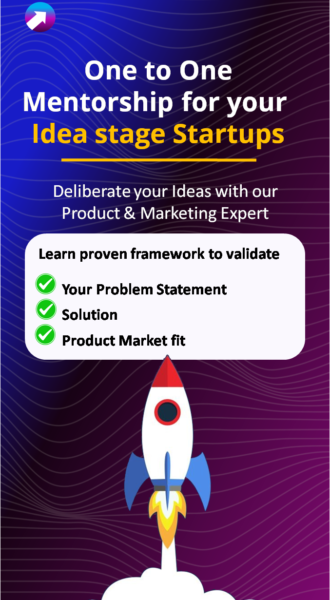
At Growth Gurukul, our One-to-One Startup Mentorship and Business Coaching Program is designed to help aspiring entrepreneurs and early-stage founders transform ideas into scalable businesses.
Whether you are still exploring opportunities or already have a startup idea, we work with you to validate customer demand, analyse competitors, refine your business model, prepare business plans, build investor-ready pitch decks and create practical growth strategies.
Our objective isn’t simply to help you start a business.
Our objective is to help you build a business that customers value, investors trust and founders are proud to lead.
If you’re serious about building a startup, don’t begin with assumptions. Begin with clarity.
Frequently Asked Questions
How can a startup mentor or business coach help me choose the right startup idea?
A startup mentor or business coach helps you evaluate customer problems, validate market demand, analyse competitors, assess financial viability and select a business opportunity that aligns with your experience, strengths and long-term goals.
Should I choose a startup idea based on market trends?
Market trends can highlight opportunities, but they should never be the only reason for choosing a business. A startup advisor helps you determine whether there is genuine customer demand, sustainable profitability and a realistic competitive advantage.
What makes a startup idea commercially viable?
A commercially viable startup solves a meaningful problem, serves a clearly defined customer segment, offers a differentiated value proposition, generates sustainable profits and has the potential to scale.
How many customer interviews should I conduct before finalizing a startup idea?
While the exact number varies by industry, speaking with 20–30 potential customers often reveals valuable patterns in customer behaviour, buying decisions and unmet needs. The objective is to identify consistent insights rather than rely on isolated opinions.
Can a startup mentor help if I already have a business idea?
Absolutely. Most founders approach a startup mentor after identifying an idea. A mentor helps validate assumptions, strengthen the business model, refine the product proposition, evaluate market opportunities and improve the overall probability of success.
Is startup mentorship useful even if I have industry experience?
Yes. Industry experience gives you valuable insights, but a startup mentor provides an external perspective, challenges assumptions, introduces structured decision-making frameworks and helps you avoid common entrepreneurial mistakes that even experienced professionals can overlook.