
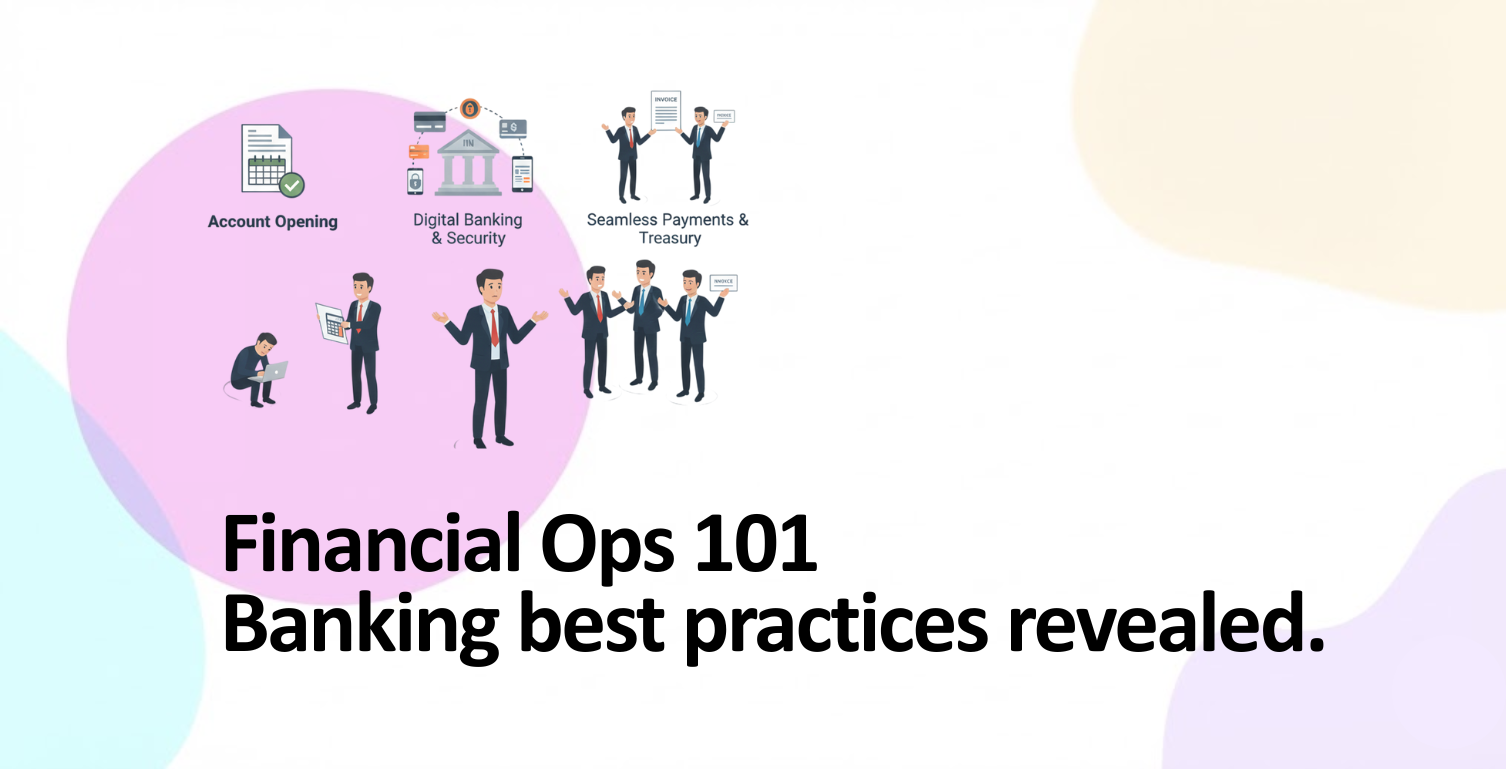
Complete startup banking guide 2025 India: current account comparison (HDFC ₹50K AQB ₹3K NMC, IDFC FIRST zero AMB first 3 years free cash deposit ₹30L/month, Axis FlexiSave ₹1L minimum), payment gateways (Razorpay 2% + 18% GST domestic, Stripe 2.9% + 30¢, Cashfree UPI 0.40%), vendor payouts (NEFT ₹3-8, RTGS ₹4-10, IMPS ₹6-15), bulk payment tools, and banking automation best practices.
Table of Contents
Startup Current Account: Comparison & Options
Not all current accounts are created equal. Startups need accounts with low minimums, transparent fees, and payment gateway integration. Here are the top options in 2025 India.
Top Startup Current Accounts (2025)
| Bank | Account Type | Minimum Balance (AQB) | NMC (Quarterly) | Key Feature | Best For |
|---|---|---|---|---|---|
| HDFC Bank | Startup Current A/c | ₹50,000 | ₹3,000 | AQB waived first 4 quarters. Free NEFT/RTGS | Early-stage startups (first 1 year) |
| IDFC FIRST Bank | FIRST Startup Current | ₹0 (first 3 years) | ₹0 | Free cash deposit ₹30L/month. Door-step banking | Scalable startups with high cash flow |
| Axis Bank | FlexiSave Current | ₹1,00,000 | ₹1,000-₹2,000 | Flexible charges based on balance. Free digital tools | Established startups (post ₹1Cr funding) |
| Kotak Mahindra Bank | Startup Current | ₹50,000 | ₹2,000 | Dedicated relationship manager. Free payment gateway | Funded startups wanting support |
| Yes Bank | StartUP Current | ₹25,000 | ₹1,500 | Lowest minimum. Zero setup cost | Bootstrap startups (tight on cash) |
HDFC Bank Startup Current Account (Most Popular)
- Average Quarterly Balance (AQB): ₹50,000
- Non-Maintenance Charges (NMC) if below AQB: ₹3,000/quarter
- But first 4 quarters: AQB waived (free for 1 year)
- After first 4 quarters: Must maintain ₹50K AQB or pay ₹3K fee
- NEFT/RTGS: Free through net banking and branch
- Cheque deposit/withdrawal: Free up to 12 per month per ₹1L AQB
- Real benefit: No fees if you maintain ₹50K+ balance. Low friction for early stage
IDFC FIRST Bank Startup Current Account (Best for Cash Flow)
- Average Quarterly Balance (AMB): ₹0 for first 3 years (waived entirely)
- Non-Maintenance Charges: ₹0 for first 3 years
- Free cash deposit limit: ₹30L/month free (unlimited deposits)
- Door-step banking: Free GPS-enabled banking at your office
- Real benefit: Zero minimum balance requirement. Ideal for high-cash-flow startups (D2C, collections-heavy)
- Catch: After 3 years, minimum balance kicks in
- Use case: E-commerce, SaaS, service providers with recurring collections
Axis Bank FlexiSave Current Account (For Established Startups)
- Minimum Balance: ₹1,00,000 (higher than others)
- NMC if below minimum: ₹1,000-₹2,000/quarter (based on balance slab)
- Free transactions per ₹1L balance: 150 NEFT/RTGS + 50 DD per month
- Real benefit: Flexible charges (pay only if you don’t maintain balance). Good for stable ₹1Cr+ revenue startups
- Use case: Post-Series A startups with predictable balance sheets
Account Features & Charges (Detailed Breakdown)
Opening a current account is one thing. Understanding the fee structure is another. Most charges are hidden in small print.
Common Current Account Charges (What You’ll Actually Pay)
| Charge Type | Typical Amount | When Applied | How to Avoid |
|---|---|---|---|
| Non-Maintenance Charge (NMC) | ₹1,500-₹3,000/quarter | If AQB falls below minimum | Maintain minimum balance (or choose bank with AMB waiver) |
| NEFT Transaction Fee | Free (most banks) | Always | Use net banking (always free) |
| RTGS Transaction Fee | Free (most banks for ₹2L+) | Always | Use for bulk payments ₹2L+ |
| Cheque Book Charges | Free (first 2-3 books), then ₹2/leaf | When you run out | Digital cheques + mobile transfers reduce need |
| Demand Draft (DD) Fee | ₹50/instrument (free up to 50/month) | If you exceed free limit | Use NEFT instead (same speed, cheaper) |
| Debit Card Replacement | Usually free | If lost/damaged | Keep card safe |
| Overdraft Facility (OD) | Interest 12-16% per annum | If you go negative | Avoid OD. Maintain buffer |
| Account Closure Fee | ₹500-₹1,000 (some banks waive) | When closing account | Check bank policy before opening |
Real Example: HDFC Bank Startup Account (Year 1 vs Year 2)
Year 1 (First 4 Quarters – Free Period)
- Average Quarterly Balance: Waived
- Non-Maintenance Charges: ₹0
- NEFT/RTGS: Free
- Cheque book (first 25 leaves per ₹1L AQB): Free
- Debit card: Free
- Total Year 1 cost: ₹0
Year 2 & Beyond (After 4 Quarters)
- Average Quarterly Balance required: ₹50,000 (per quarter)
- If maintained: No charges
- If not maintained: NMC ₹3,000/quarter = ₹12,000/year
- Real impact: Most startups maintain ₹50K balance anyway (for operations). Net cost = ₹0
Payment Gateway Integration (Usually Free)
- Most startup current accounts offer: Zero setup fees for payment gateway integration
- Settlement: Same-day or T+1 (depending on gateway + payment method)
- Fee is paid to payment gateway, not bank: Gateway charges 1.5-2.5% + GST (separate from account maintenance)
Payment Gateways: Domestic & International
A payment gateway is how you accept customer payments (cards, UPI, net banking, wallets). Wrong choice = higher fees + customer drop-offs.
What Payment Gateways Do
- Accept payments: Credit/debit cards, UPI, net banking, wallets (Apple Pay, Google Pay), international cards
- Charge transaction fees: Percentage of transaction + fixed component
- Settle to bank: Daily/T+1. Fund lands in your current account
- Handle disputes: Chargebacks, refunds, disputes management
- Provide APIs: For developers to integrate into apps/websites
When to Use Which Payment Gateway
- Razorpay: Domestic customers primarily (India e-commerce, SaaS, subscriptions). Best UPI + wallet support
- Stripe: International customers + SaaS billing. Global compliance, multi-currency
- Cashfree: Marketplaces + vendor payouts. Complex payment splits. Best disbursement tools
- PayU: Mid/large merchants with domestic + international needs. Legacy support
- Dual-gateway strategy: Razorpay for India checkout, Stripe for international. Reduces drop-offs
Payment Gateway Comparison: Pricing & Features (2025)
Payment gateway fees are the single biggest operational cost for e-commerce + SaaS startups. Here’s what you’ll actually pay.
Payment Gateway Fee Comparison (2025)
| Gateway | Domestic TDR (Cards) | Domestic UPI | International (Cards) | Settlement | Best For |
|---|---|---|---|---|---|
| Razorpay | 2% + 18% GST | 0% (free on wallet, 0.50-1% on cards) | 3% + 18% GST | T+1 (net banking same-day) | India e-commerce. UPI/wallets strong |
| Stripe | 2.9% + ₹15 per transaction | Not supported natively (via Razorpay) | 2.9% + $0.30 (+ 1-2% FX markup) | T+2 (slower) | SaaS, global customers, subscriptions |
| Cashfree | 1.90% + 18% GST (varies) | 0.40% (lowest UPI rate) | 3.5% + 18% GST | T+1 | Marketplaces, high volume UPI, payouts |
| PayU | 2% + 18% GST | 0.50-1% (varies) | 3% + 18% GST | T+1 | Established merchants, enterprise support |
| PhonePe Business | 1.50% + 18% GST (competitive) | 0.40% (low-cost UPI) | Not available | T+1 | High UPI volume, retail |
Real Cost Example: ₹1 Lakh Transaction
Razorpay (Card Payment, Domestic)
- Transaction: ₹1,00,000
- Gateway fee: 2% = ₹2,000
- GST (18%): ₹360
- Total cost: ₹2,360 (2.36% of transaction)
- You receive: ₹97,640
Razorpay (UPI Payment, Same Amount)
- Transaction: ₹1,00,000
- Gateway fee: 0% (free)
- Total cost: ₹0
- You receive: ₹1,00,000 (full amount)
- Key insight: UPI vastly cheaper than cards. Incentivize UPI at checkout
Stripe (Card Payment, International Customer)
- Transaction (in USD): $1,200 (≈ ₹1,00,000 at ₹83 per USD)
- Stripe fee: 2.9% + $0.30 = $34.80 + $0.30 = $35.10
- FX markup: 1-2% (Stripe’s margin on currency conversion) = ~$12-24
- Total cost: $47-59 (≈ ₹3,900-4,900 on ₹1L INR equivalent)
- You receive (INR): ₹95,100-96,100
Payment Gateway Feature Comparison
| Feature | Razorpay | Stripe | Cashfree | PayU |
|---|---|---|---|---|
| UPI Support | Yes (excellent) | No (requires integration) | Yes (best rates) | Yes (good) |
| Wallet Support (Apple/Google Pay) | Yes | Yes | Yes | Yes |
| International Cards | Yes (3% + GST) | Yes (2.9% + 30¢) | Yes (3.5% + GST) | Yes (3% + GST) |
| Subscriptions/Recurring | Yes (solid) | Yes (best-in-class) | Yes (good) | Yes |
| Vendor Payouts | Yes (decent) | Via Connect (complex) | Yes (best) | Yes (basic) |
| Developer Documentation | Good | Excellent (world-class) | Good | Adequate |
| Fraud Detection | Good | Excellent | Good | Good |
| Support Quality | Good (24/7 email) | Good (email/chat) | Excellent (responsive) | Good (enterprise) |
Payment Gateway Selection Framework
- Primarily Indian customers (B2C e-commerce): Razorpay. Strong UPI support, 0% UPI fee = lower costs
- SaaS with subscription billing: Stripe. Superior subscription engine + recurring payment reliability
- Marketplace (Uber, Swiggy-like): Cashfree. Best payout tools for vendor disbursement
- International customers + India base: Dual gateway (Razorpay + Stripe). Accept both routes, reduce drop-off
- Established merchant (₹10Cr+ revenue): Negotiate with PayU or Razorpay. Volume discounts available
Vendor Payout Tools & Bulk Payments
If you’re a marketplace or have contractors, bulk payouts are critical. Manual transfers = time wasted + errors. Automation essential.
Vendor Payout Tools in India 2025
| Tool | Platform Fee | Payment Methods | Best For | Key Feature |
|---|---|---|---|---|
| Razorpay Payouts | Bank charges + ₹0 platform fee | NEFT, RTGS, IMPS, UPI, Amazon Pay | Startups + marketplaces | Embedded in payment gateway. Dashboard integration |
| Cashfree Payouts | NEFT ₹3-8, RTGS ₹4-10, IMPS ₹6-15, UPI ₹3 | NEFT, RTGS, IMPS, UPI, Bank transfers | High-volume payouts | Lowest UPI rate (₹3). Scheduled payouts. API-first |
| BriskPe (Briskpe.com) | 0.75% (A2A transfers) + GST | Bank transfers, NEFT, RTGS | Corporate payroll + vendor payments | Mass payout automation, TDS/GST compliance |
| Wise (For International) | 0.5-2% FX + processing | International wire, local transfers | Paying international vendors | Mid-market FX rates (better than banks) |
| Payoneer (For Freelancers) | 1-2% per payout | Payoneer wallet → bank transfers | Freelancer payments | Freelancer-friendly, wallet model |
Bank Direct Bulk Payment Systems (Corporate Portal)
- HDFC CMS (Corporate Monetary Service): ₹500-₹1,000/month portal fee + NEFT/RTGS charges
- ICICI BizPay360: Similar to HDFC. Monthly portal fee + per-transaction charges
- Axis Bank Corporate: Bulk payment portal with similar fee structure
- Cost trade-off: Portal fee + transaction charges vs platform fee (Cashfree). Cashfree usually cheaper for <100 payouts/month
Payout Pricing: NEFT vs RTGS vs IMPS (Detailed Breakdown)
Different payment methods have different costs + speeds. Here’s what you’ll pay for each.
Payout Methods & Costs via Cashfree (Most Competitive 2025)
| Payment Method | Amount ≤ ₹1,000 | ₹1,000-₹25,000 | Amount > ₹25,000 | Speed | Best Use Case |
|---|---|---|---|---|---|
| NEFT (Fastest) | ₹3 | ₹5 | ₹8 | 30 minutes to 2 hours (real-time batch) | Small vendors, frequent small payments |
| RTGS | ₹4 | ₹6 | ₹10 | Settlement same-day (within 1 hour in most cases) | Bulk large transfers ₹2L+ |
| IMPS (Instant Money Payment Service) | ₹6 | ₹8 | ₹15 | Instant (within minutes) | Urgent payouts, gig payments |
| UPI (Cheapest) | ₹3 | ₹3 | ₹3 | Instant to 5 minutes | Freelancers, small transactions (most cost-effective) |
| Amazon Pay | ₹6-18 | ₹6-18 | ₹6-18 | Instant (Amazon wallet) | Users with Amazon Pay balance |
Real Example: 50 Vendor Payouts (Monthly Payroll Equivalent)
Scenario: 50 vendors, average ₹20,000 each
- Total payout amount: 50 × ₹20,000 = ₹10,00,000
- Using NEFT (₹5 per payout in this amount range): 50 × ₹5 = ₹250 total
- Using RTGS (₹6 per payout): 50 × ₹6 = ₹300 total
- Using IMPS (₹8 per payout): 50 × ₹8 = ₹400 total
- Using UPI (₹3 per payout): 50 × ₹3 = ₹150 total
- Monthly cost difference (NEFT vs IMPS): ₹150 = 0.015% of ₹10L
- Annual savings (NEFT vs IMPS): ₹1,800/year
Real Example: Bulk Payout via Bank CMS Portal
HDFC Corporate Monetary Service (CMS) – Year 1 Cost
- Monthly portal subscription: ₹500-₹1,000
- Per NEFT transaction: ₹5-15 (varies by bank)
- 50 payouts/month × 12 months = 600 payouts/year
- Transaction cost (600 × ₹10 average): ₹6,000
- Portal fee (12 months × ₹750 average): ₹9,000
- Total annual cost via bank CMS: ₹15,000
- Total via Cashfree API (50 × ₹5 × 12): ₹3,000
- Annual savings with Cashfree: ₹12,000
Payout Method Selection Framework
- UPI preferred: Cheapest (₹3), instant, widely supported. Use for all UPI-enabled vendors
- NEFT for bulk: Cost-effective (₹5-8), fast enough (1-2 hours), ideal for daily vendor payouts
- RTGS for large amounts: ₹2L+ (minimum RTGS limit varies by bank). Same-day settlement
- IMPS for urgent: Use only when needed (premium cost ₹8-15, but instant). Gig economy / urgent scenarios
- Batch payouts overnight: Use NEFT in batch at off-peak hours (2 AM-6 AM). Speeds up processing + cheaper
Banking Best Practices & Automation
Smart banking isn’t just about picking the right account. It’s about optimization, automation, and cash flow management.
Top 10 Startup Banking Best Practices
1. Automate Everything
- Payment collection: Use payment gateway + recurring billing API
- Vendor payouts: Set up automated bulk payout schedules (weekly/monthly)
- Reconciliation: Use accounting software (Zoho Books, Tally) for auto-reconciliation with bank feeds
2. Maintain Cash Buffer (3-6 Months)
- Rule: Keep 3-6 months of operating expenses in current account
- Why: Handles seasonal variations, vendor payments, payroll gaps
- Excess cash: Park in high-yield savings or FDs (earn 6-8% interest)
3. Optimize for Tax Efficiency
- GST compliance: Ensure all vendor invoices include GST. Claim input tax credit
- TDS deductions: Contractors >₹50K/month trigger TDS. Factor into payments
- Tax calendar: Track quarterly estimated taxes, file on time
4. Use Payment Gateway Analytics
- Razorpay/Stripe dashboard: Monitor conversion rates, decline rates, payment method preferences
- Insight: If 30% of customers use UPI (0% fee) vs 70% cards (2% fee), optimize UPI (saves money)
- A/B test: Change payment method order at checkout. Measure impact on cart abandonment
5. Choose Correct Settlement Frequency
- Daily settlement: Money lands in account daily (best for cash flow)
- Weekly settlement: Money lands weekly (some gateways charge 0.1-0.5% less)
- Monthly settlement: Rare for startups, used for large merchants only
- Choose daily unless you prioritize cost savings over cash flow
6. Multi-Gateway Strategy (If International)
- Route India customers → Razorpay: Better UPI support, lower fees
- Route international customers → Stripe: Better multi-currency handling
- Use gateway aggregators or hybrid approaches: Allows dynamic routing based on customer location
7. Negotiate Fees at Scale
- Once you hit ₹1Cr+ revenue: Payment gateway fees are negotiable
- Typical negotiated rates: 1.5-1.8% (vs standard 2%)
- Ask for: Volume discounts, reduced settlement fees, dedicated support
8. Monitor Bank Reconciliation Weekly
- Every Friday afternoon: Reconcile bank statement vs accounting records
- Check for: Duplicate transactions, failed payouts, unexpected fees
- Early detection: Catches fraud, errors before they compound
9. Segregate Operating vs Growth Cash
- Operating account: Current account for day-to-day + payroll
- Growth/reserve account: Separate savings account earning 7-8% interest
- Benefit: Discipline on cash allocation, interest earnings on reserve
10. Document Everything (For Audit + Investor Due Diligence)
- Bank statements: Keep 6-year rolling archive
- Reconciliation sheets: Monthly P&L matched to bank
- Why: Investors + auditors ask for 3 years bank statements. Organization matters
Key Takeaways: Startup Banking Mastery
1. Startup current account comparison: HDFC ₹50K AQB (₹3K NMC waived first 4 quarters), IDFC FIRST zero AMB first 3 years + ₹30L/month free cash deposit, Axis FlexiSave ₹1L minimum with flexible charges. Choose based on cash flow pattern.
2. HDFC startup account best for early stage (free first year). IDFC FIRST best for high-cash-flow startups (D2C, collections). Axis FlexiSave best for ₹1Cr+ revenue startups.
3. Payment gateways: Razorpay 2% + 18% GST (domestic), 3% + 18% (international), 0% UPI. Stripe 2.9% + ₹15 (domestic), 2.9% + $0.30 (international, +1-2% FX). UPI is free = optimize for UPI adoption.
4. Cashfree cheapest payouts: NEFT ₹3-8, RTGS ₹4-10, IMPS ₹6-15, UPI ₹3 (flat). UPI preferred for vendor payouts (cost + speed).
5. Razorpay best for India-first startups (strong UPI + wallet support). Stripe best for SaaS/global customers. Cashfree best for marketplaces (payout tooling). Choose based on customer base + payment methods needed.
6. Real cost example: 50 vendor payouts/month via NEFT = ₹250/month (₹3K/year). Same via bank CMS = ₹1,250/month (₹15K/year). API-first payout tools 4-5x cheaper than bank portals.
7. Monthly account maintenance cost realistic: HDFC first year ₹0, year 2+ ₹0-3K (if maintain ₹50K balance). IDFC FIRST first 3 years ₹0. Payment gateway fees 1.5-2% of revenue (separate from account).
8. Settlement frequency: Daily settlement = best for cash flow (money lands same day). Weekly/monthly = minor fee discounts but cash flow suffers. Choose daily unless ₹10M+ volume.
9. Dual-gateway strategy for international: Razorpay for India customers (lower UPI fees), Stripe for international (better compliance + multi-currency). Reduces drop-off, optimizes per-region costs.
10. Vendor payout optimization: Use UPI where possible (₹3 flat, instant, cheapest). NEFT for bulk (₹5-8, 1-2 hours, cost-effective). RTGS for ₹2L+ (same-day, regulatory minimum).
11. Cash buffer target: 3-6 months operating expenses in current account. Covers seasonal volatility + emergency payroll.
12. Fee negotiation: Once ₹1Cr+ revenue, payment gateway fees negotiable (1.5-1.8% possible vs 2% standard). Ask when you reach scale.
13. Monthly reconciliation: Reconcile bank vs accounting records weekly. Catches fraud, errors, duplicate transactions early.
14. Real year-1 banking cost estimate: Current account ₹0-3K, payment gateway (2% of revenue), payouts ₹3-5K for 50 vendors/month. Total ≈ 2% of revenue + fixed ₹500/month.
15. Action: Open HDFC or IDFC FIRST account this month. Integrate Razorpay payment gateway (no fee, quick setup). Set up bulk payout API via Cashfree or bank CMS. Automate reconciliation with accounting software.
