
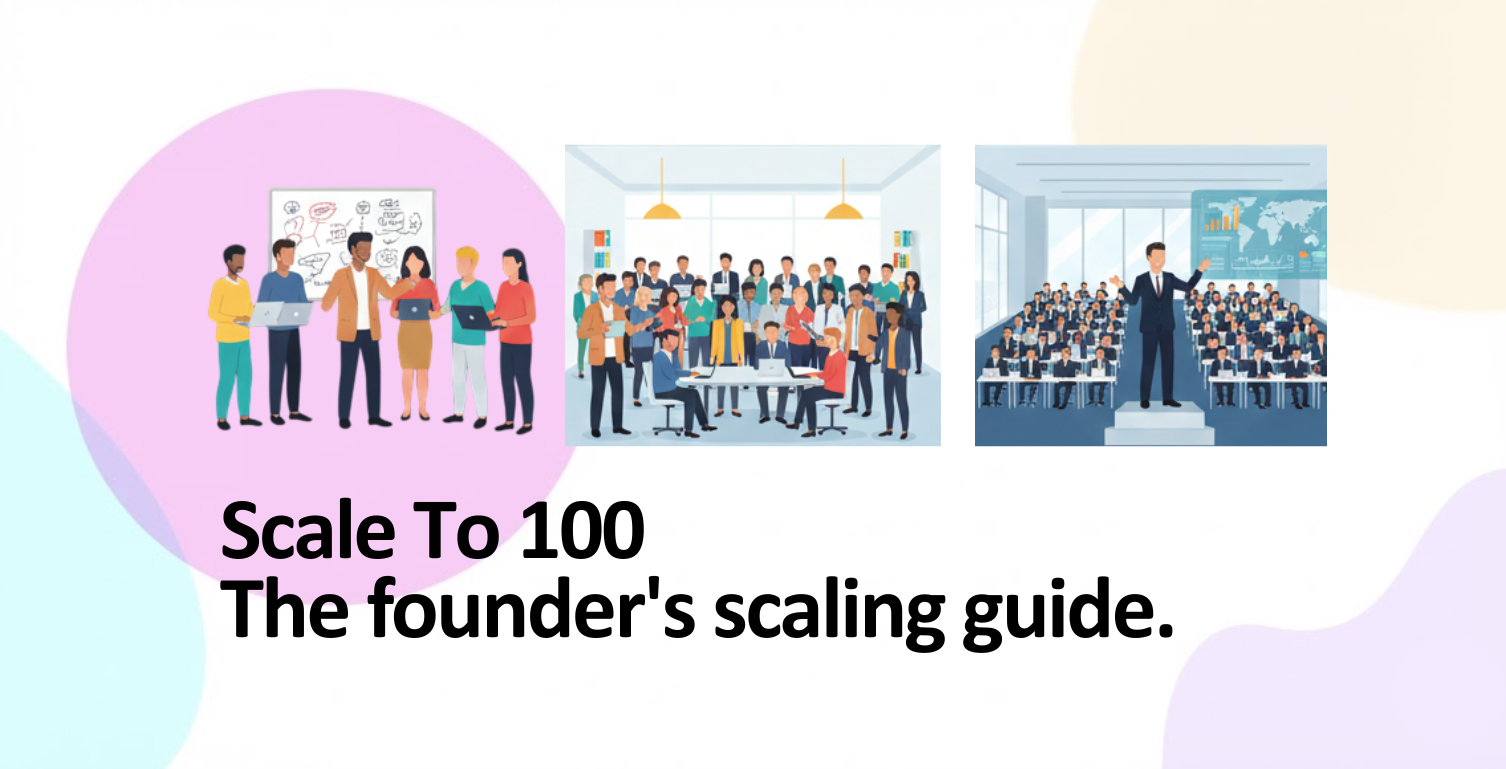
Master founder-to-CEO transition (2025): Founder vs CEO role differences, 4 growth stages requiring role evolution, when to delegate vs lead, hiring external CEO (44% external appointments Spencer Stuart 2024), board roles post-founder, succession planning, avoiding founder burnout, staying engaged without micromanaging.
Table of Contents
- Founder vs CEO: Fundamentally Different Roles
- Why Founders Don’t Make Great CEOs (And Vice Versa)
- Four Growth Stages: Role Evolution by Company Size
- Strategic Delegation: When to Let Go
- Hiring an External CEO: Process & Challenges
- Founder-CEO vs External CEO: Decision Framework
- Transition Timeline: 12-18 Month Roadmap
- Founder as Board Member/Advisor: What Works
- The Emotional Reality: Letting Go of Control
- Common Transition Mistakes (And How to Avoid Them)
- Founder Step-Back Checklist
Founder vs CEO: Fundamentally Different Roles
Founders and CEOs are not the same person, even when they’re the same individual. The founder role is about creation, vision, and taking risks. The CEO role is about execution, scaling, and managing stakeholders. They require fundamentally different skillsets
Core Differences: Founder vs CEO
| Dimension | Founder | CEO | Implication |
|---|---|---|---|
| Primary Focus | Product innovation, vision, problem-solving | Revenue, profitability, strategic planning, operations | Founders think “what can we build?”, CEOs think “what should we scale?” |
| Decision Authority | Often unilateral (especially early stage). Can move fast | Constrained by board oversight. Must align stakeholders | Founder autonomy becomes CEO bottleneck |
| Equity Ownership | Typically 15-50% (founders retain majority pre-Series A) | Usually <5% for external CEOs, sometimes 5-15% for founder-CEOs | Founder equity gives them power; external CEO power comes from role |
| Accountability | Self-accountable early; shifts to internal/external stakeholders later | Reports to board, investors, employees, customers | Founder accountability is intrinsic; CEO accountability is external |
| Risk Tolerance | High personal and financial risk. Can bet company on pivot | Lower personal risk (salary + limited upside). Manages risk | Founders bet company; CEOs protect it |
| Time Horizon | Thinks long-term (built to last, personal legacy) | Balanced short-term (quarterly) and long-term (3-5 year) | Founder plays infinite game; CEO plays defined game |
| Change Tolerance | Embraces major pivots, product changes, market shifts | Prefers stability, incremental change, documented processes | Founder pivots fast; CEO executes consistently |
The fundamental truth: A founder who can’t evolve into CEO thinking becomes a liability. A CEO who thinks like a founder becomes reckless. Most founders struggle to make this mental shift, which is why many successful companies eventually replace founder-CEOs with professional management
Why Founders Don’t Make Great CEOs (And Vice Versa)
The data is clear: 44% of S&P 1500 new CEO appointments in 2024 were external hires (up from 32% in 2023), the highest rate since Spencer Stuart began tracking in 2000. At mid-cap companies, 58% of CEO appointments were external. Why are boards increasingly replacing founders?
Why Founder-CEOs Often Fail at Scale
- Emotional attachment to decisions: Founders are emotionally tied to every product decision, hire, and strategy pivot. CEOs need to make decisions based on data, not emotional attachment. A founder who says “but that was my original vision!” will struggle when that vision needs to change
- Inability to delegate: Founders built the company. They know how everything works. Delegation feels like losing control. But at scale, delegation is mandatory. A founder trying to approve every hire or review every decision becomes the bottleneck
- Lack of operational rigor: Founders operate on instinct and speed. CEOs operate on systems, processes, and KPIs. A 10-person startup can succeed on instinct. A 100-person startup dies without systems
- Culture preservation anxiety: Founders worry that hiring professional managers will “ruin” the culture. But culture doesn’t scale through osmosis. It requires documentation, training, and systems. Many founders resist this formalization
- Burnout: 41% of founders in 2025 cited burnout as the reason for stepping down. Building a company is exhausting. Many founders reach a point where they can’t sustain the pace. External CEOs have fresh energy
Why External CEOs Can Struggle
- No mission understanding: They weren’t there at the beginning. They don’t feel the company’s purpose the way founders do. Decision-making is clinical, not inspired
- Employee resistance: Employees were often hired by founders and are emotionally committed to founder’s vision. New CEO feels like an outsider. “She doesn’t get what we’re building”
- Founder-investor relationships: If founder-investors push back against CEO decisions, it creates confusion. Who really runs the company?
- Execution vs innovation: External CEOs are great at execution but often fail at innovation. They optimize what exists instead of imagining what could exist
Four Growth Stages: Role Evolution by Company Size
Your founder role must evolve as your company scales. There are four distinct stages, each requiring different founder involvement
Stage 1: Startup Phase (1-10 Employees)
Founder role: Everything. You are product, sales, operations, fundraising, culture
CEO-like activities: Almost none. You’re not managing managers. You’re not running board meetings. You’re solving customer problems
Delegation needed? No. You need to stay deeply involved. Step back too early and company loses direction
Key decision-maker? Yes. You make almost all decisions unilaterally
Lesson: This is YOUR job. Don’t delegate yet. Hiring a CEO here is a mistake
Stage 2: Growth Phase (11-40 Employees)
Founder role: Transitioning from doer to leader. Still deeply involved in product and vision, but starting to build leadership team
CEO-like activities: Emerging. You’re managing functional leads (Head of Eng, Head of Sales). You’re starting to delegate but don’t feel comfortable yet
Delegation needed? Beginning. You must start delegating operational decisions or you become bottleneck. But strategy stays with founder
Key decision-maker? Mostly. You still have final say on major decisions, but listening to functional leads more
Lesson: This is when you start building your management layer. Hiring a CEO here is premature (you still need founder leadership), but you must start delegating
Stage 3: Scaling Phase (41-100 Employees)
Founder role: Strategic leadership, fundraising, external relationships, vision continuity. Less operational involvement
CEO-like activities: This IS CEO work now. Board meetings, stakeholder management, strategic planning, hiring/retention of VPs
Delegation needed? Critical. You MUST delegate operational decisions. Company won’t scale otherwise. Bottlenecks everywhere if founder is involved in every decision
Key decision-maker? Mission-critical decisions only (major pivots, acquisitions, strategic direction). Everything else delegates to VP team
Lesson: This is the critical inflection. If you stay operational here, you’re the constraint. If you delegate too much, company loses direction. This is where many founders either evolve into CEO or start thinking about hiring one
Stage 4: Mature Phase (100+ Employees)
Founder role: External leadership (fundraising, partnership, market representation). Board strategy. Optional operational involvement
CEO-like activities: Minimal. CEO manages operations. Founder is increasingly external-facing
Delegation needed? Mandatory. Everything delegates except founder’s highest-value activities (fundraising, partnerships, vision)
Key decision-maker? Only strategic decisions (major acquisitions, market direction, capital allocation). Day-to-day operations run without founder input
Lesson: At this stage, many founders transition to board roles or step down entirely. Some stay as founder-CEO but MUST act like a CEO (delegation, systems, strategic focus)
Strategic Delegation: When to Let Go
The hardest skill for founders is delegation. You built this. You know how everything works. But delegation is the only way to scale. Here’s the framework
What Founders Should Always Keep
- Product vision and strategy: The “why are we building this?” decision is founder’s. You should shape product direction, not build features
- Fundraising and investor relationships: Investors want to talk to founder. VCs ask for founder involvement. Keep this
- Major hiring (VPs/C-suite): Hiring your direct reports is founder decision. You need to veto bad cultural fit
- Culture and values: Culture is founder’s job. You set the tone. Delegation of culture is delegation of company soul
- Market positioning and messaging: How the world sees your company is founder’s voice. Stay involved in brand, positioning, customer narrative
- Major pivots/strategic decisions: If you’re considering new market, new product, acquisition, founder approval required
What Founders Must Delegate (Or Become Bottleneck)
- Day-to-day operations: Hiring individual contributors, approving vacation, operational decisions. Delegate to functional leads
- Financial management (eventually): Once you have CFO, delegate budget approval, expense management, accounting decisions
- Engineering decisions below strategy: Architecture decisions, tech stack, sprint planning. Delegate to VP Engineering
- Sales execution: Who calls what customer, what’s the pipeline, deal structure. Delegate to Head of Sales
- Marketing tactics: Campaign execution, content scheduling, event logistics. Delegate to VP Marketing
- People operations: Performance reviews (except your directs), HR policy, employee relations. Delegate to People/HR
The test for delegation: “If I don’t do this, does the company fail?” If yes, you do it. If no, delegate it. The number of “must do” items shrinks as you hire better people
Hiring an External CEO: Process & Challenges
In 2024-2025, 44% of S&P 1500 CEO appointments were external hires (Spencer Stuart). But hiring external CEO is complex. Here’s the real process
When External CEO Makes Sense
- Founder burnout: Founder is exhausted, wants out. Fresh leader needed
- Growth inflection: Company needs different expertise (global expansion, enterprise sales, IPO-readiness). Founder lacks this
- Industry expertise gap: Company needs someone with healthcare, finance, manufacturing experience. Founder is product-focused only
- Founder wants to focus on product/innovation: Founder is brilliant at innovation but dislikes operations. CEO can handle operations while founder innovates
- Investor pressure: VCs or PE investors believe founder can’t scale. They require external CEO as investment condition
- Crisis leadership: Company in trouble. Need experienced operator to fix things
When External CEO Does NOT Make Sense
- Company is pre-product-market fit (wrong time)
- Founder has been CEO for <3 years (too early)
- Founder is not willing to step back (will undermine new CEO)
- Company culture is fragile (new CEO will break trust)
- Company is in startup mode, not scaling mode (wrong stage)
Finding and Vetting External CEO (6-9 Month Process)
| Phase | Timeline | What Happens | Founder Role |
|---|---|---|---|
| Planning | Month 1 | Define CEO role, requirements, compensation. Board discussion. Decide internal vs external search | Founder participates in board conversation. Clarify what new CEO needs to own |
| Search | Months 2-4 | Use executive search firm. Create candidate pipeline. Board members network. First interviews | Founder meets top candidates (not all, but final 5-10). Assess cultural fit |
| Diligence | Months 4-6 | Deep vetting of finalists. Reference calls (talk to previous boards, teams). Assess track record | Founder involved in final interviews. Key personality assessment. Can they work WITH founder? |
| Offer & Negotiation | Months 6-7 | Finalize compensation (base, bonus, equity). Negotiate start date. Board approval | Founder may participate in compensation discussion |
| Onboarding | Months 7-9+ | CEO starts. Founder transitions role. 30-60-90 day plan. Founder intro to investors, key customers | Founder critical here. Makes introductions. Provides context. Doesn’t undermine new CEO |
Founder-CEO vs External CEO: Decision Framework
Should you hire external CEO or can founder evolve into role? Here’s the decision framework
Choose Founder-CEO If:
- Founder is willing to delegate and learn CEO skills (coachability matters)
- Founder has relevant expertise (sales founder leading sales-driven company, for example)
- Company culture is tightly tied to founder (founders are brand)
- Company is still innovating rapidly (internal disruption more important than operational excellence)
- You can’t attract external CEO-level talent (pre-IPO startup)
Choose External CEO If:
- Founder is burned out and unwilling to evolve
- Company needs specific expertise founder lacks (global expansion, enterprise selling, M&A)
- Investors are pressuring for external leadership
- Company is in crisis and needs experienced operator
- Founder is better at product/innovation than management
Transition Timeline: 12-18 Month Roadmap
If you decide to step back as CEO (but stay at company), this is the typical timeline
Months 1-4: Preparation & Handoff Planning
- Document all key relationships (investor, customer, partner contacts)
- Document decision frameworks (how do we make decisions around X?)
- Identify 3-5 new CEO key priorities for first 90 days
- Decide: Will founder stay as advisor, board member, or step down entirely?
- Communicate transition plan to board + key investors early (they should approve)
Months 5-9: CEO Onboarding & Founder Step-Back
- New CEO starts. First 30 days: founder introduces to investors, key customers, team
- Founder transitions from decision-maker to advisor. “That’s a great question. What do you think?” instead of “Here’s what we should do”
- CEO makes first major decisions (budget, hires, strategy shifts). Founder watches, doesn’t overrule
- All-hands meeting: Founder publicly backs CEO. “I trust her to lead. My role is now [board/advisor]. Please support her fully”
- Founder reduces time in office. Starts other projects (fundraising, partnerships, next company)
Months 10-18: Full Transition
- Founder no longer in weekly operations. Maybe monthly board meeting
- CEO owns all major decisions. Founder doesn’t reverse decisions
- New management layer reporting to CEO (not founder). Founder is peer to CEO, not CEO’s boss
- Founder voice in board meetings only. Doesn’t attend exec meetings
- Founder fully transitioned to board/advisor role
Founder as Board Member/Advisor: What Works
Many founders step down as CEO but stay as board member or advisor. This requires discipline. Here’s how to do it right
Founder as Board Member (Best Path)
What you do: Attend quarterly board meetings. Provide strategic input. Vote on major decisions (board-level only)
What you DON’T do: Interfere with CEO operations. Don’t go around CEO to talk to VPs. Don’t second-guess CEO decisions in all-hands. Don’t micromanage
Red flags to avoid: Founder undermining CEO with employees, investors talking directly to founder about strategy, founder reversing CEO decisions
Your value: Long-term perspective. Mission preservation. Tiebreaker on strategic questions. Outside board dynamics
Founder as Advisor (Risky)
- Best if founder has specific expertise (product advisor, founder advisor, etc.)
- Risk: CEO and founder operate in separate channels. Confusion about who decides what
- Make advisor role explicit. What are you advising on? How often do you meet? Is your advice binding?
Key principle: Founder must respect CEO authority completely. If you can’t do that, don’t take board seat. Either fully transition or step away entirely
The Emotional Reality: Letting Go of Control
The hardest part of stepping back is not operational. It’s emotional. You built this company. You made every hard decision. Now someone else is leading. This is hard
Common emotions founders experience: Loss of identity (you’ve been CEO for 10 years, who are you now?), fear your vision will be lost (new CEO might kill what you loved), anxiety about mistakes (what if they fail?), loss of power (you’re not the decision-maker anymore), regret (should I have stepped back?)
How to navigate this: Acknowledge that stepping back is the right decision if metrics say so. You’re not failing. You’re evolving. Find new challenges (fundraising, new venture, board work). Stay connected but don’t micromanage. Celebrate CEO wins publicly (builds her authority)
Worst approach: Stay at company but undermine CEO. This creates chaos. If you can’t support the CEO fully, step away completely
Common Transition Mistakes (And How to Avoid Them)
| Mistake | Why It Happens | Impact | How to Avoid |
|---|---|---|---|
| Stepping back too quickly | Founder wants out, burns out, or overestimates new CEO’s ramp speed | New CEO lacks context. Makes bad decisions. Team confused. CEO fails | Overlap for 6+ months. New CEO shadows founder. Gradual handoff |
| Not stepping back enough | Founder can’t let go. Fears losing control. Still “has better ideas” | CEO is figurehead. Real decisions made by founder. Team confused. CEO frustrated and leaves | Be honest: if you can’t fully delegate, hire coach or therapist. Work through control issues |
| Hiring wrong CEO | Board rushes hire. Wrong skill profile. Bad cultural fit | CEO fails within 12-18 months. Company destabilized. Founder has to jump back in | Take 6-9 months to find right person. Deep reference checks. Culture assessment |
| Not documenting decision-making | Founder assumes “the way we do things” is obvious | New CEO makes decisions that violate implicit rules. Founder upset. Founder overrides | Document: values, hiring criteria, decision frameworks, who owns what. Make implicit explicit |
| Founder stays involved but passive | Founder can’t fully step back or step back. Sits in meetings but doesn’t contribute | Weird dynamic. CEO feels judged. Team unsure who’s really in charge. Trust erodes | Decide: Are you engaged or stepping away? Pick one. Either contribute fully or exit fully |
| Not communicating transition to team | Founder and board think transition is clear. They don’t tell employees | Employees don’t know who to report to. Mixed signals. Confusion about authority | All-hands meeting. Founder publicly backs CEO. Clear new reporting structure. Written communication |
Founder Step-Back Checklist
Before stepping back, founder should complete:
☐ Document company vision, values, culture (make implicit explicit)
☐ Document decision-making frameworks (how we decide X, who owns Y)
☐ Document key relationships (investor contacts, strategic partner contacts, key customer relationships)
☐ Build leadership team (no single person dependencies except founder)
☐ Implement systems and processes (OKRs, KPIs, meeting cadence, communication norms)
☐ Create succession plan for founder role (who replaces you as CEO?)
☐ Get board approval for transition plan
☐ Communicate plan to key investors early (they should have input)
☐ Decide your post-CEO role (board? advisor? equity? salary? time commitment?)
☐ Get executive coach for new CEO (helps them ramp faster)
☐ Plan all-hands announcement (founder publicly backs new CEO)
☐ Ensure new reporting structure is clear (VPs report to CEO, not founder)
☐ Define decision authority (what can CEO decide alone? What needs board approval?)
☐ Create 30-60-90 day plan for new CEO (first 90 days priorities)
☐ Schedule handoff meetings (introduce CEO to key stakeholders)
☐ Establish rhythm for CEO feedback (monthly CEO coaching, not directive)
Key Takeaways: Founder Role Evolution
1. Founder and CEO are fundamentally different roles: Founder creates, CEO executes. Same person can hold both, but must shift mindset as company scales
2. Four growth stages require different founder involvement: Startup (1-10 people = founder only), Growth (11-40 = founder + leaders), Scaling (41-100 = founder delegates), Mature (100+ = external leadership). Role evolves at each stage
3. Founders don’t make great CEOs because: Emotional attachment, inability to delegate, lack of operational rigor, culture preservation anxiety, burnout. This isn’t failure; it’s reality
4. External CEO appointments hit record 44% in 2024 (Spencer Stuart): Up from 32% in 2023. Boards increasingly believe external leaders bring fresh perspective
5. Mid-cap companies hire external CEOs 58% of the time (vs Fortune 500 at 24%). Smaller, faster-growing companies especially likely to bring in external talent
6. Strategic delegation is the skill that fuels sustainable growth: Keep vision, fundraising, hiring, culture. Delegate operations, execution, day-to-day decisions. This is the 10→100 inflection
7. Hire external CEO when: Founder burned out, company needs different expertise, investors demand it, crisis needs experienced operator. Don’t do it pre-product-market fit or if founder won’t step back
8. Finding external CEO takes 6-9 months: Planning (1 month), search (3 months), diligence (2 months), negotiation (1 month), onboarding (2+ months). Don’t rush this decision
9. Stepping back emotionally is harder than operationally: Founders experience loss of identity, fear of lost vision, anxiety about mistakes, loss of power. This is real and worth acknowledging
10. If stepping back as CEO: Founder can become board member (best), advisor (risky), or step away entirely (cleanest). Board member works if founder respects CEO authority completely
11. Common mistake #1: Stepping back too quickly = new CEO lacks context, makes bad decisions, fails. Solution: 6+ month overlap, founder shadows new CEO, gradual handoff
12. Common mistake #2: Not stepping back enough = founder undermines CEO, team confused, CEO frustrated and leaves. Solution: Be honest about your capability to let go
13. Document everything before stepping back: Vision, values, decision frameworks, key relationships, succession plan. Make implicit explicit so CEO doesn’t have to reverse-engineer culture
14. All-hands announcement is critical: Founder publicly backs CEO. “I trust her completely. Please give her full support.” Founder’s tone sets team tone
15. New CEO ramp timeline: 30 days getting context, 60 days making first decisions, 90 days on full authority. First year is about learning. Second year is about executing
16. Founder equity retention matters: Even if stepping back, founder typically retains 5-25% equity. This keeps alignment with new CEO
17. Post-CEO founder role works best if founder has specific value-add: Fundraising, partnerships, product vision, market insight. Don’t stay “just because” – stay because you add value
18. The real test: Can founder celebrate CEO wins publicly? Can founder NOT reverse CEO decisions? If answer is no to either, founder needs to fully step away
19. Timeline for transition: Planning (months 1-4), onboarding (months 5-9), full transition (months 10-18). 12-18 months is typical for founder-to-board transition
20. Action plan: (1) Assess: What stage is company in? (2) Honest self-assessment: Can I delegate? Do I want to? (3) Decide: Founder-CEO evolution or external CEO? (4) Document: Create all systems/processes. (5) Transition: 12-18 month phased approach. (6) Redefine: New role on board or advisory. Planned transition > crisis transition
